
 English
 Español
 عربى
عربى

0-100000kg Professional Custom Lifting Platform
We have a professional team with decades of industry experience. Relying on the continuous in-depth development of the s...

Content
In modern industrial and construction fields, Lift Platform has become an indispensable piece of equipment. Whether it is internal material handling in factories or high-altitude operations on construction sites, lift platforms greatly improve work efficiency and operational convenience with their efficient, safe, and flexible features. This article will delve into the types, core functions, safety mechanisms, and maintenance methods of Lift Platform, helping readers fully understand and correctly use this essential equipment.
In traditional material handling and high-altitude work, manual labor or simple machinery often faces low efficiency and high risk. The emergence of Lift Platform has solved these problems, providing safety guarantees for industrial production and construction. The core value of Lift Platform lies in its ability to carry different weights of objects or personnel and lift them smoothly to a predetermined height, reducing manual labor intensity and lowering the likelihood of accidents.
Different types of lift platforms offer different advantages. For example, Industrial Lift Platform is mainly used in factories or warehouse environments to handle large quantities of materials, while Portable Lift Platform emphasizes flexibility, suitable for confined spaces or scenarios requiring frequent relocation. Understanding the type and working principle of a Lift Platform is the first step in selecting and using it.
In industrial environments, material handling and equipment maintenance usually require high load capacity and reliability. Industrial Lift Platform is specifically designed for such purposes. Its structure is robust, usually made of steel or alloy, and can carry hundreds of kilograms or even tons. Compared with traditional cranes, industrial lift platforms save operational space and achieve precise lifting within limited heights.
Industrial lift platforms are widely used in warehouses, logistics, and assembly lines. Operators can complete lifting operations easily through a simple control panel, eliminating cumbersome manual labor. Additionally, industrial lift platforms often feature anti-slip platforms and guardrails, further ensuring operator safety.
Hydraulic technology is a core component of modern lift platforms. Hydraulic Lift Platform uses hydraulic cylinders and pumps to achieve smooth lifting. Its advantage lies in its ability to carry heavier loads and provide steady movement without significant vibrations. The hydraulic system can automatically adjust pressure according to the load, ensuring smooth operation under different weights.
Hydraulic lift platforms are commonly used in construction, high-altitude maintenance, and heavy equipment handling. For instance, on construction sites, external wall work for high-rise buildings requires platforms to remain at different heights. Hydraulic lift platforms can precisely control the height, ensuring efficiency and safety. Maintenance of hydraulic lift platforms is also relatively simple, involving regular checks of hydraulic fluid and seals.
In scenarios requiring frequent movement or limited space, portable lift platforms demonstrate unique advantages. Portable Lift Platform is usually lightweight, foldable, or equipped with wheels, making it easy to transport between different work sites. Although portable lift platforms have lower load capacity, they excel in light material handling and personnel lifting.
The use of portable lift platforms improves operational flexibility and reduces storage and transportation costs. For small to medium factories, maintenance sites, or temporary construction tasks, portable lift platforms offer a highly cost-effective solution. They are easy to operate, and even non-professional personnel can quickly learn to use them after simple training.
Whether in industrial or construction environments, safety is always the top priority when using lift platforms. Modern Lift Platform incorporates multiple safety features to minimize operational risks.
Platforms are typically equipped with guardrails and anti-slip surfaces to prevent personnel or objects from falling. Especially in high-altitude operations, these structural designs effectively reduce accidents. Some platforms automatically lock when reaching certain heights to prevent accidental descent.
Overloading is a common risk during lift platform operation. Most modern Lift Platform devices include overload protection mechanisms. When the weight exceeds the design limit, the platform automatically stops lifting and triggers an alert. This ensures both operator safety and equipment longevity.
Lift platforms usually have emergency stop buttons, allowing operators to immediately halt operations in unexpected situations. Some platforms also feature fault detection systems to monitor hydraulic pressure, motor status, and control systems. Any abnormality triggers a warning for prompt action.
Besides hardware safety, operational standards are crucial. Even with advanced safety features, improper operation may lead to accidents. All personnel using Lift Platform should undergo professional training, learning operational procedures, emergency handling, and safety inspection points. Combining safety awareness with operational skills maximizes risk reduction.
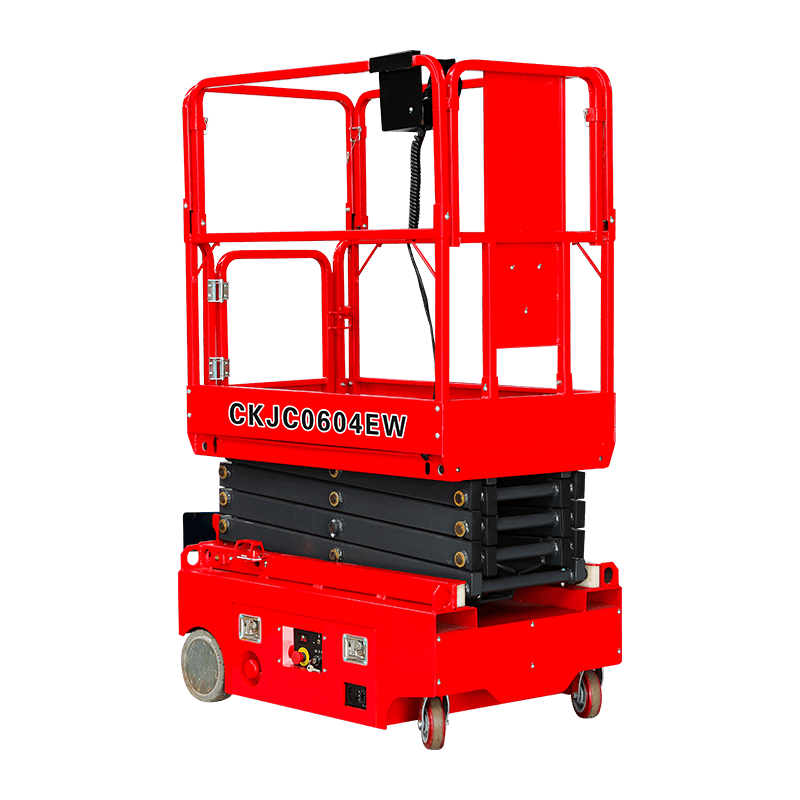
Proper maintenance and care are essential for Lift Platform. High-quality platforms may still malfunction or pose risks if neglected. Effective maintenance extends service life and ensures operational stability and safety.
Before each use, operators should perform basic inspections, including checking platform structure, guardrails, and smooth operation of lifting mechanisms. Hydraulic lift platforms require monitoring hydraulic fluid levels to ensure system pressure is normal. Daily inspection, though simple, prevents minor issues from becoming major problems.
Electrical systems should also be checked, including control panels, switches, and emergency stop buttons. Through routine inspections, potential issues are identified early, reducing the risk of accidents.
Beyond daily checks, systematic maintenance should be performed at specified intervals. Hydraulic systems require regular fluid replacement, filter cleaning, and seal inspection. Mechanical components should be lubricated, ensuring smooth movement and minimizing wear.
Support structures and platforms need inspection for corrosion or weld loosening. Movable parts of portable lift platforms, such as wheels and folding joints, should remain lubricated and flexible. Comprehensive, regular, and timely maintenance ensures reliable operation of Lift Platform.
Proper operational habits also extend platform life. Avoid frequent overloading and rapid lifting, maintain smooth movement, clean and protect platforms in harsh environments, and store them in dry, ventilated spaces. Operator habits directly influence lifespan; adherence to guidelines maximizes both safety and durability.
First, identify the purpose. For heavy material handling or large industrial environments, Industrial Lift Platform is preferred. For construction or high-altitude maintenance, Hydraulic Lift Platform provides stable lifting. For frequent relocation or confined spaces, Portable Lift Platform is ideal.
Check if the platform includes guardrails, anti-slip surfaces, overload protection, and emergency stop features. Evaluate ease of maintenance and routine inspection. Choosing a platform that is easy to maintain reduces long-term operational costs while ensuring safety.
Consider initial purchase, maintenance, and operational efficiency. High-quality platforms may have higher upfront costs but offer superior durability, stability, and safety. A long-term cost-benefit analysis helps select the most suitable Lift Platform, balancing economy and safety.
With industrial automation and construction technology advancement, Lift Platform applications are expanding. Future platforms may integrate smart control systems for automated operation and remote monitoring. Advances in hydraulics and lightweight design will make platforms safer, more efficient, and flexible. In industrial production, warehouse logistics, construction, and equipment maintenance, lift platforms will continue to play a key role.
Safety management and operational standards will become crucial, with professional training and standardized processes guiding industry development. Scientific use and maintenance of Lift Platform increase efficiency and significantly reduce accident risks, providing reliable support for various operations.
Lift Platform is an essential device in modern industrial and construction sectors. From industrial platforms to hydraulic and portable options, each type meets specific operational needs. Understanding platform types, core functions, safety designs, and maintenance methods enables users to select and operate lift platforms effectively, improving efficiency while ensuring safety.
Proper use and maintenance of Lift Platform protect both the equipment and the operators. As technology advances, the intelligent, automated, and efficient development of lift platforms will further enhance their value, offering more convenience and safety across industries.
We have a professional team with decades of industry experience. Relying on the continuous in-depth development of the s...
This self-propelled single mast aluminum alloy lift platform is built with high-strength aluminum alloy, offering a ligh...
The hydraulic self-propelled scissor lift aerial work platform can be easily driven and moved on flat and solid ground a...
Semi-electric scissor lifts platform are lighter and smaller in size, making it easier for workers to lift or lower the ...

