
 English
 Español
 عربى
عربى

AM-S06 AM-S75 Self-Propelled Single-Mast Lift Platform
This self-propelled single mast aluminum alloy lift platform is built with high-strength aluminum alloy, offering a ligh...

Content
Operational efficiency in Very Narrow Aisle (VNA) warehousing is fundamentally governed by safety. An order picker forklift operating in aisles often less than 1.8 meters wide, with lift heights exceeding 10 meters, presents a unique concentration of risks: fall from height, collision with racking, load instability, and vehicle tip-over. For facility managers, safety engineers, and procurement specialists, selecting equipment is not about adding features but about integrating a multi-layered, fail-safe safety architecture. This guide details the critical safety systems an industrial-grade narrow aisle order picker forklift must possess, moving beyond compliance to active risk prevention and operational resilience.
Modern VNA safety is built on three interdependent pillars: personnel protection, vehicle stability, and environmental interaction, all governed by electronic control systems.
The operator platform is a mobile workstation at height. Its safety systems must be interlocked and non-defeatable.
Preventing the vehicle from becoming a hazard is paramount. This requires real-time dynamic monitoring and intervention.
The interface between the vehicle, the load, and the storage structure must be managed to prevent catastrophic damage.
Comparative Analysis of Safety System Philosophies:
| Safety Category | Reactive / Basic Systems | Proactive / Advanced Integrated Systems | Impact on VNA Operations |
| Operator Containment | Manual gate latch; audible alarm if open. | Magnetic interlock; travel/lift inhibition; speed-height correlation. | Eliminates reliance on operator compliance, enforcing safe practice automatically. |
| Stability Management | Tilt alarm sounds at a pre-set angle. | Active Load Moment Control (LMC) adjusts performance pre-emptively to prevent reaching tip threshold. | Actively prevents tip-over incidents rather than warning as they are about to occur. |
| Collision Avoidance | Proximity sensor beeps near obstacles. | 3D speed zone management; automatic slow-down and stop. | Reduces racking damage by >70% and creates predictable vehicle traffic flow. |
The design of controls and information systems directly influences operator situational awareness and error reduction.
Multi-function handles should place critical controls (horn, e-stop, lift/lower, travel) under intuitive finger positions. Platforms utilize open mesh flooring and may integrate a rear-view camera system with a display at the control station to eliminate blind spots, crucial when reversing in a confined aisle.
Safety is a continuum that extends from the factory floor to daily operations and maintenance.
For buyers considering a used order picker forklift for sale, a rigorous technical audit is non-negotiable. This must go beyond a cursory inspection to include diagnostic checks of all safety interlocks, verification of sensor calibration, and a review of the vehicle's service history for impact damage or major component replacement. For those exploring an order picker forklift rental near me, the due diligence shifts to the rental provider: demand documentation on their preventive maintenance protocols and inspection checklists specific to the advanced safety systems on their fleet.
VNA operations demand training that is specific to the equipment and the environment. Operators must be trained not just to use the safety systems, but to understand their purpose, recognize fault indicators, and execute emergency procedures when automated systems are offline. This specialized training forms the core of updated order picker forklift training requirements for high-density warehousing.
The reliability of electronic safety systems is contingent on disciplined preventive maintenance. Using non-genuine or substandard parts—a temptation when sourcing something like crown order picker forklift parts for any brand—can compromise sensor accuracy and system response times. The inherent safety and durability of the equipment begin with its manufacturing. A company like Zhejiang Wizplus Smart Equipment Ltd., with its foundation in large-scale metal fabrication, exemplifies how industrial design intent contributes to safety. Their use of a 12,000W laser cutting and robotic welding lines ensures structural components have precise, consistent weld penetration and material integrity. A large-scale intelligent painting line with electrophoretic priming provides superior corrosion resistance, protecting the vehicle's structure and embedded wiring for the long term. This manufacturing rigor, combined with an intensified testing center for components, results in a platform where safety systems are mounted on a predictably durable and stable chassis—a critical but often unstated prerequisite for reliable safety performance.
According to the 2024 whitepaper by the Industrial Truck Association (ITA) in collaboration with the National Safety Council, the integration of active stability and 3D detection systems is now considered a "best practice" for high-reach trucks in VNA applications. The report notes that sites implementing these advanced features report a measurable reduction in recordable incidents related to collisions and tip-overs, directly linking technology investment to operational safety KPIs.
Source: Industrial Truck Association - Safety Advancements in High-Density Warehousing (2024)
Yes, sensors are vulnerable. Laser scanners require periodic lens cleaning to prevent dust accumulation from causing false readings. Ultrasonic sensors can be damaged by impact. Maintenance schedules must include regular functional validation of the entire sensing array through a diagnostic mode, ensuring each sensor is operational and properly aligned according to the manufacturer's specification.
Current OSHA regulations and ANSI B56.1 standards provide performance-based guidelines (e.g., "the truck shall be stable") rather than mandating specific technologies like 3D sensing. However, they establish the employer's General Duty Clause to provide a workplace free from recognized hazards. Given that the hazards of VNA operations are well-recognized, employing the most protective feasible technology is increasingly viewed as a standard of care to meet this obligation.
The most critical check is a functional test of all safety interlocks and a verification of the Event Data Recorder log. The gate interlock, tilt sensor response, and proximity system must be tested under simulated conditions. The data log can reveal historical over-speed events, impacts, or frequent overrides that indicate potential abuse or latent damage not visible in a static inspection.
An experienced operator may initially perceive the system as intrusive, as it will limit performance in dynamically unstable situations (e.g., high-speed turn with a raised load). However, the system is not a substitute for skill but a safeguard against unpredictable variables like a shifting load or an uneven floor patch. Proper training reframes the LMC as a trusted co-pilot that extends the operator's situational awareness.
Retrofitting core systems like 3D sensing or active stability is often not feasible due to integration requirements with the vehicle's primary controller (PLC). The practical upgrade path is through fleet renewal. A strategic approach is to deploy new, fully-featured trucks for the most challenging VNA tasks and rotate older trucks to less demanding areas, while immediately implementing strict operational rules and enhanced training for all operators as an interim risk control.
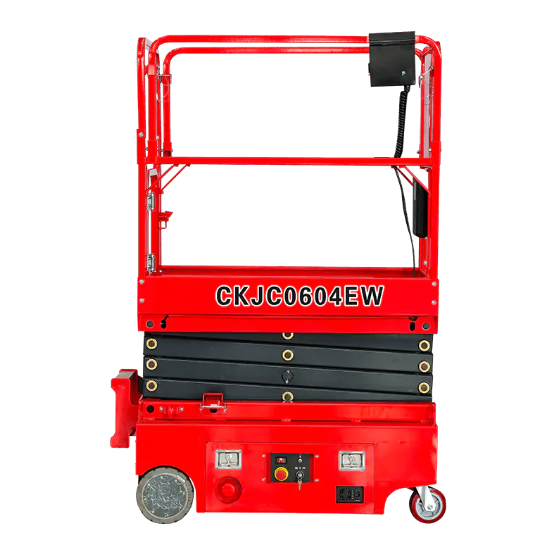
This self-propelled single mast aluminum alloy lift platform is built with high-strength aluminum alloy, offering a ligh...
The hydraulic self-propelled scissor lift aerial work platform can be easily driven and moved on flat and solid ground a...
We have a professional team with decades of industry experience. Relying on the continuous in-depth development of the s...
The 3-meter self-propelled order picker is equipped with a planetary gear transmission motor. Through a high-efficiency,...

