
 English
 Español
 عربى
عربى

AM-S06 AM-S75 Self-Propelled Single-Mast Lift Platform
This self-propelled single mast aluminum alloy lift platform is built with high-strength aluminum alloy, offering a ligh...

Content
In the rapidly evolving landscape of industrial maintenance and warehousing, the demand for compact, efficient, and safe aerial access solutions is at an all-time high. As facility managers seek to optimize floor space and improve productivity, the choice of equipment becomes critical. Among the various categories of Aerial Work Platforms (AWPs), vertical mast lifts have emerged as a premier solution for tasks requiring elevation in extremely confined environments. Unlike scissor lifts or boom lifts, which offer larger platforms but significantly larger footprints, vertical mast lifts are designed specifically to navigate narrow aisles and pass through standard doorways without compromising on working height. This unique capability makes them indispensable for industries ranging from retail stock replenishment to complex facility maintenance. As the market shifts towards smarter and more agile equipment, understanding the technical advantages and specific applications of these machines is essential for making informed procurement decisions. Zhejiang Wizplus Smart Equipment Ltd., founded in 2021 and located in the Provincial Economic and Technological Development Zone of Deqing County, Huzhou City, Zhejiang Province, China, stands at the forefront of this innovation. The company covers an area of 40,000 square meters, including a factory of 20,000 square meters, and is equipped with an experienced design and production team with professionals who have been dedicated to the industry for decades. It is an equipment manufacturing company integrating R&D, design and production. The company's products cover a series of professional high-tech equipment, such as aerial work platforms, smart logistics, and smart agriculture, which is widely used in many fields such as construction, industrial and commercial logistics, agriculture.
The shift towards green energy and sustainable industrial practices has revolutionized the AWP sector. The electric vertical mast lift has become the standard for indoor operations due to its zero-emission profile and quiet operation. Unlike internal combustion engine models, electric lifts produce no exhaust fumes, making them safe for use in enclosed spaces such as warehouses, shopping malls, and food processing plants. Modern electric units utilize advanced lithium-ion battery technology that provides extended runtime and faster charging cycles compared to traditional lead-acid batteries. This electrification not only reduces the total cost of ownership by minimizing fuel costs but also significantly lowers maintenance requirements due to the absence of complex engine components. The integration of smart battery management systems further enhances efficiency by monitoring power output and preventing deep discharge, thereby extending the overall lifespan of the power unit.
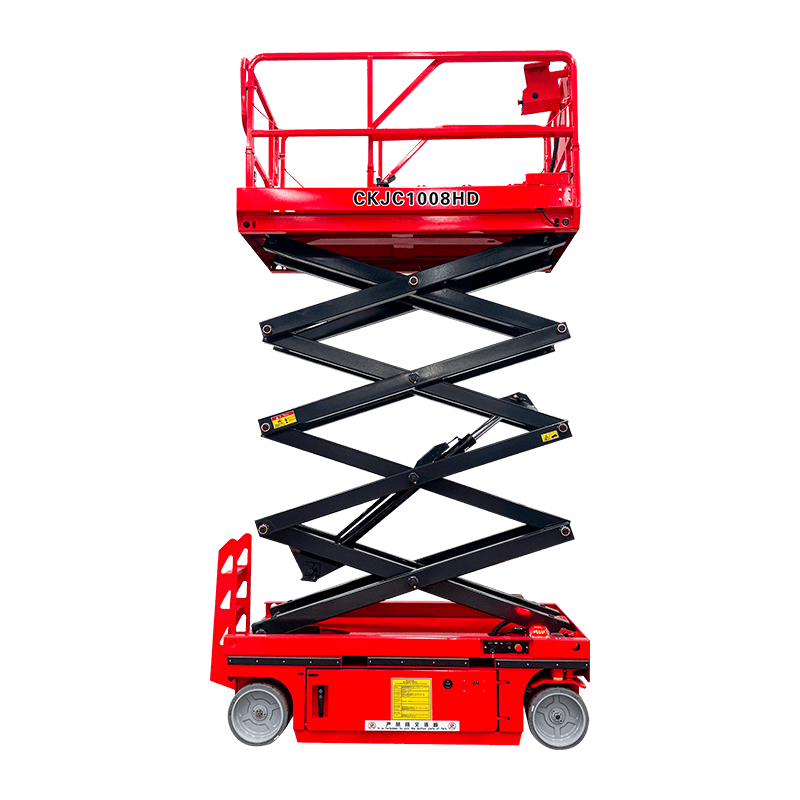
For light-duty applications where the travel distance is minimal, the push around vertical mast lift offers an optimal balance of cost-effectiveness and functionality. These units are designed to be manually moved by the operator, eliminating the need for complex drive motors and steering systems. This reduction in mechanical complexity results in a lighter overall weight, which is crucial for applications where floor load limits are a concern. Push-around models are typically favored in situations where the unit is primarily stationary at a work site for extended periods, such as stock picking or light fixture installation. Despite their manual propulsion, these units are equipped with high-efficiency lifting mechanisms that provide smooth and precise vertical elevation, ensuring that operator fatigue is minimized during repetitive tasks.
| Feature | Push Around Model | Self-Propelled Model |
| Weight Capacity | Lighter (approx. 150-200kg) | Heavier (approx. 250kg+) |
| Cost | Lower initial investment | Higher initial investment |
| Mobility | Manual effort required | Motorized drive controls |
One of the most defining characteristics of modern warehouse logistics is the maximization of storage density, which necessitates equipment that can operate in very tight aisles. A vertical mast lift for narrow aisles is engineered with a zero-turn radius and a chassis width often measuring less than 80 centimeters. This compact form factor allows operators to navigate effortlessly between racking systems that would be inaccessible to larger machinery. The mast design itself is crucial; it must be rigid enough to provide a stable platform at height but slim enough to not obstruct the operator's view or path. These lifts often feature foldable guardrails or flip-out platforms that allow the machine to pass through standard doorways and elevator openings, making them versatile tools for multi-floor facilities.
When selecting equipment for specific industrial tasks, understanding the technical nuances is paramount for safety and efficiency. Compact vertical mast lift specifications generally revolve around the trade-off between platform height and lifting capacity. While these lifts are smaller than their scissor or boom counterparts, they offer impressive working heights, often reaching up to 12 meters (approximately 40 feet) depending on the model. Key specifications to analyze include the platform's dimensions, which must be large enough to accommodate the operator and their tools, yet small enough to fit within the work envelope. Another critical specification is the stowed height, which determines if the machine can be transported in standard service elevators or stored in closets. Additionally, the gradeability—the slope a machine can climb while fully loaded—is a vital spec for facilities with ramps or uneven surfaces.
| Specification | Entry Level Specs | High Performance Specs |
| Working Height | Up to 6 meters | Up to 12+ meters |
| Lifting Capacity | 100 kg - 150 kg | 200 kg - 250 kg |
| Stowed Height | Under 1.5 meters | Under 2.0 meters |
To ensure operational safety and maximize the return on investment, a rigorous indoor vertical mast lift maintenance schedule must be implemented. While electric lifts have fewer moving parts than diesel engines, they still require regular attention to critical components. The most common maintenance tasks involve checking the hydraulic system for leaks, ensuring the integrity of the battery cables and connections, and inspecting the structural pins and bushings for wear. Because these machines are often used in clean environments like retail or data centers, it is also important to keep the wheels and chassis clean to prevent the tracking of debris. Regular safety inspections should include testing the emergency lowering mechanism and verifying the functionality of the pothole protection systems, which prevent the lift from moving if the ground is not level.
The manufacturing quality of aerial work platforms directly correlates to the safety of the end-users and the longevity of the equipment. Zhejiang Wizplus Smart Equipment Ltd. is equipped with various high-end production facilities, including 12000W high-power laser cutting machines, 4000W fully automatic laser pipe cutting machines, 300-ton CNC bending machines, and fully CNC intelligent pipe bending machines. Furthermore, the facility utilizes a welding robot assembly line, CNC lathes, and a large-scale intelligent painting assembly line with the capability of spraying paint, spraying plastic, and electrophoresis on large equipment. The company also possesses an intensified testing equipment and experimental center for various products and accessories. The company's factory is specifically designed for the production of large metal structural parts, while suitable for the manufacture of various sizes of metal structural parts. The steel structure factory is 20 meters high, and the concrete structure factory is 11 meters high, equipped with 50-ton and 16-ton cranes, etc. The company's products are exported to many countries and regions such as Europe, America, the Middle East and Southeast Asia, and have received consistent recognition from international clients. At the same time, the company actively develops the domestic market, has hundreds of distributors, and has a complete sales and after-sales service network. The company has always been adhering to the core concepts of 'professionalism, innovation, integrity and efficiency', actively responding to new development concepts such as green and low-carbon, insisting on the product design concepts of electrification, greening and intelligence, and comprehensively improving the quality of company's products. We sincerely welcome users and friends at home and abroad to visit the company for communication and cooperation. Let’s promote the high-level development of the aerial work industry and create a better future together.
The primary difference lies in the footprint and lifting mechanism. A vertical mast lift has a very small footprint and typically moves straight up using a telescopic mast, making it ideal for single-person tasks in narrow aisles. A scissor lift uses a cross-linked mechanism that can carry more weight and more people but requires a much larger floor space to operate.
While some models come with outriggers for stabilization on slightly uneven ground, compact vertical mast lifts are primarily designed for indoor use on flat, concrete surfaces. Using them on steep slopes or rough terrain can compromise stability and safety. Always check the manufacturer's specifications regarding gradeability and slope limits.
Generally, the electric vertical mast lift offers excellent battery life relative to its size. Because the lift mechanism requires less power to elevate a single person compared to lifting a scissor platform with multiple people, the energy consumption is lower, allowing for longer shift operations on a single charge, especially when utilizing modern lithium-ion batteries.
Regulations vary by country and region. In many jurisdictions, non-powered (push around) lifts that are manually moved may have different training requirements compared to self-propelled lifts. However, it is always recommended that operators receive proper training on the specific model to understand load limits, safety features, and operational procedures.
Key aspects include regular battery maintenance (watering for lead-acid or charging checks for lithium), inspecting and lubricating the mast moving parts, checking the tires for wear and debris, and ensuring that all safety switches and emergency stop buttons are functional. Keeping the unit clean from dust and grime also prevents mechanical jamming.
This self-propelled single mast aluminum alloy lift platform is built with high-strength aluminum alloy, offering a ligh...
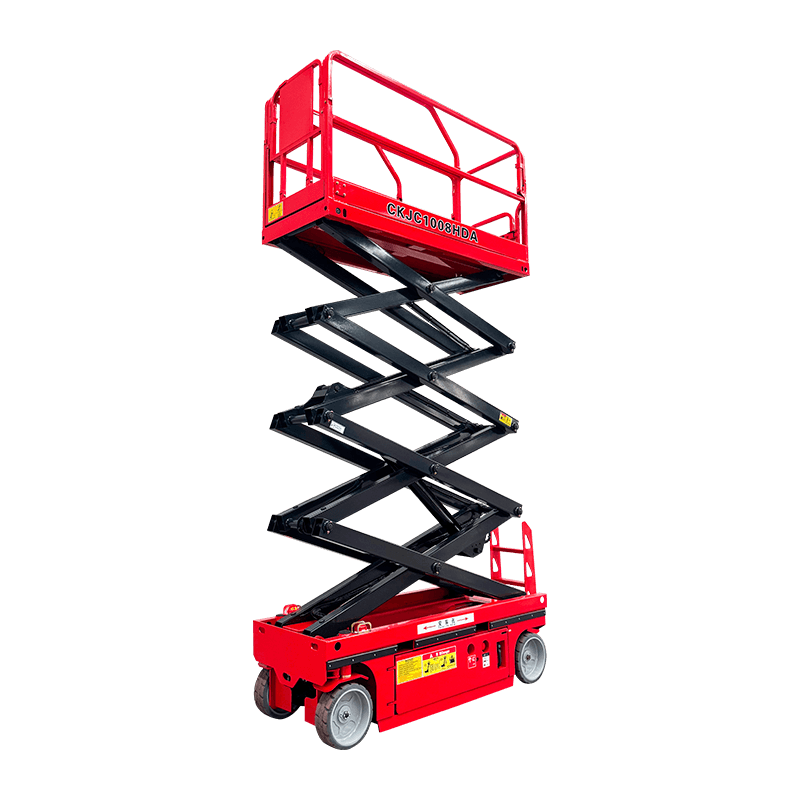
The hydraulic self-propelled scissor lift aerial work platform can be easily driven and moved on flat and solid ground a...
Semi-electric scissor lifts platform are lighter and smaller in size, making it easier for workers to lift or lower the ...
We have a professional team with decades of industry experience. Relying on the continuous in-depth development of the s...

