
 English
 Español
 عربى
عربى

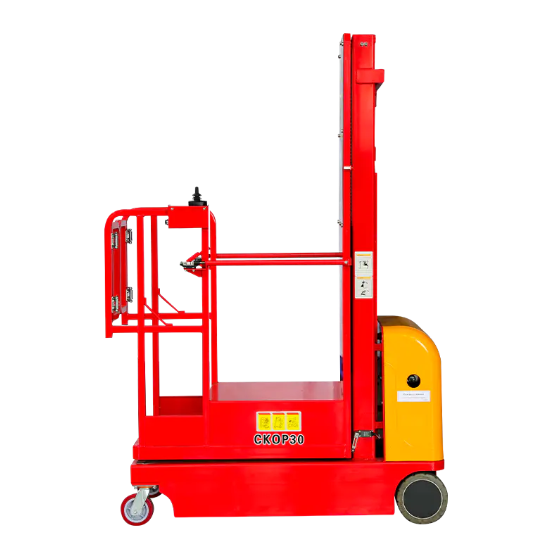
CKOP30 CKOP35 CKOP40 CKOP45 Self-Propelled Full Electric High-Altitude Reclaimer
The lifting, movement and steering of the CKOP30 CKOP35 CKOP40 CKOP45 self-propelled full electric high altitude reclaim...

Content
Operating machinery and sustaining life at high altitudes presents a fundamental engineering challenge: critical resources like breathable air and water become exceedingly scarce. A high-altitude reclaimer is a specialized system designed to counteract this by recovering and recycling vital substances from the local environment or process streams. This technical analysis delves into the core physics, thermodynamic cycles, and system integration of these devices, focusing on their application in aerospace and critical industrial sectors. Understanding the working principle is essential for specifying, procuring, and effectively deploying this technology in platforms ranging from commercial aircraft to portable emergency systems.
The design of a high-altitude reclaimer is fundamentally constrained by the properties of the atmosphere above 10,000 feet. Key parameters shift dramatically:
These conditions define the "source" for any reclamation process, whether the target is oxygen for breathing, water for cabin humidity, or specific process gases. For a portable high-altitude oxygen reclaimer for emergency use, these constraints are compounded by stringent requirements for weight, power consumption, and rapid deployment.
The core function of a reclaimer is to separate a target substance from a bulk gas stream. The two primary physical principles employed are condensation and sorption, each governed by distinct thermodynamics.
This is the most common method for a high-altitude reclaimer for aircraft cabin air systems. Warm, moisture-laden cabin air is cooled below its dew point, causing water vapor to condense on a cold surface. The thermodynamic cycle can be approximated as:
The main engineering challenge is achieving a sufficiently cold heat sink at altitude to reach the low dew point, often requiring vapor-compression refrigeration cycles or air-cycle machine cooling.
For oxygen concentration or carbon dioxide removal, sorption processes are used. These rely on materials like zeolites or metal-organic frameworks (MOFs) that selectively adsorb specific gas molecules at certain pressures and temperatures. The core of this technology is a Pressure Swing Adsorption (PSA) or Temperature Swing Adsorption (TSA) cycle.
| Cycle Phase | Pressure Swing Adsorption (PSA) Process | Temperature Swing Adsorption (TSA) Process |
|---|---|---|
| Adsorption | Feed gas (e.g., cabin air) is pressurized into the adsorbent bed. Target molecules (e.g., N₂) are trapped, allowing O₂-rich product to pass through. | Feed gas flows through the bed at ambient pressure. Adsorption is driven by the material's high affinity at the operating temperature. |
| Desorption / Regeneration | The bed pressure is rapidly reduced (depressurized), releasing the trapped molecules as waste. | The adsorbent bed is heated, reducing its capacity and driving off the captured molecules. |
| Key Energy Input | Mechanical work for gas compression. | Thermal energy for bed heating. |
| Advantage for High-Altitude Use | Fast cycle times, suitable for dynamic flow conditions. | Can be more efficient at very low inlet pressures where compression is difficult. |
These sorption cycles are at the heart of advanced portable high-altitude oxygen reclaimer for emergency use systems, enabling the extraction of breathable oxygen from thin air without heavy oxygen storage tanks.
Transforming a thermodynamic principle into a reliable machine requires the integration of precision components.
Evaluating a high-altitude reclaimer requires analyzing key efficiency specifications for industrial high-altitude reclaimers. These metrics allow for direct comparison between systems:
| Performance Parameter | Definition & Impact | Typical Unit |
|---|---|---|
| Recovery Efficiency (η) | The mass of target product recovered divided by the mass available in the feed stream. Directly tied to system energy consumption and size. | Percentage (%) |
| Specific Power Consumption (SPC) | Electrical or shaft power input required per unit mass of product (e.g., kWh/kg of O₂ or H₂O). The primary metric for operational cost and feasibility on power-limited platforms. | kWh/kg |
| Product Purity | The concentration of the target substance in the output stream. Critical for life-support applications (e.g., >90% O₂). | Percentage (%) |
| Mass & Volume Specific Capacity | Product output rate per unit system mass or volume. Paramount for aerospace and portable applications. | kg/hr/kg or kg/hr/m³ |
Integrating a reclaimer into a larger system like an high-altitude reclaimer for aircraft cabin air systems is a systems engineering task. It must interface with air conditioning packs, avionics for power and control, and safety monitoring systems. Validation involves extensive ground and flight testing to prove performance across all operational envelopes—from hot-day takeoff to cold-soak cruise at altitude. This rigorous process is a precursor to the even more demanding path of military-grade high-altitude reclaimer certification standards.
Meeting military-grade high-altitude reclaimer certification standards (such as those defined by agencies or in standards like MIL-STD-810) requires demonstrating exceptional reliability and environmental toughness. Testing includes:
According to the latest review by the International Council on Systems Engineering (INCOSE), there is a growing emphasis on model-based systems engineering (MBSE) and digital thread methodologies in the certification of complex aerospace systems, including life support equipment like advanced reclaimers. This approach creates a continuous, authoritative digital record from requirements to operational data, enhancing traceability, reducing integration risk, and potentially streamlining the certification process for next-generation adaptive systems.
The transition from a validated prototype to a certified, reliable production unit hinges on manufacturing precision. Components like microchannel heat exchangers or high-pressure adsorbent beds demand tight tolerances and consistent material properties. A manufacturer with deep expertise in precision fabrication, clean assembly processes, and rigorous quality control is critical. Such a partner brings more than just production capacity; they bring the process discipline necessary to ensure that every unit leaving the line performs identically to the one that passed qualification tests. This vertical capability—from component machining to final system integration and test—ensures the efficiency specifications for industrial high-altitude reclaimers are not just theoretical maximums but guaranteed performance standards.
The high-altitude reclaimer is a compelling example of applied thermodynamics solving a critical resource problem. Its working principle, whether based on condensation or sorption cycles, must be expertly engineered into a system that is lightweight, efficient, robust, and controllable. For mission planners and procurement specialists, a deep understanding of these principles and their associated performance metrics is the key to selecting the right technology. As the drive for longer endurance and greater operational independence in aerospace and defense continues, the role of efficient, reliable reclamation technology will only grow in strategic importance.
A filter or scrubber typically removes contaminants without recovering a usable product. A high-altitude reclaimer is defined by its goal of recovery and reuse. For example, a CO₂ scrubber in a submarine removes carbon dioxide and vents it. A reclaimer on a space station would capture that CO₂ and use a separate process (like the Sabatier reaction) to convert it back into oxygen and water—closing the life-support loop.
At high altitudes, every watt of power and every kilogram of weight are at a premium. Electrical power must be generated by engines, fuel cells, or limited solar/battery systems. A high SPC means the reclaimer consumes a large portion of the platform's available energy for a small output, which is often unsustainable. Optimizing SPC is often more important than maximizing absolute recovery rate, as it dictates whether the system is viable for long-duration missions or on power-constrained platforms like UAVs or portable devices.
While possible in theory, it is highly inefficient in practice. The optimal thermodynamic conditions and separation mechanisms for water (condensation at ~0-10°C) and oxygen (sorption at ambient or lower temperatures) are very different. Combining them usually results in a bulky, complex, and energy-inefficient system. For applications requiring both, like a manned spacecraft, separate, optimized subsystems for water recovery and oxygen generation/capture are always used, though they may share some utilities like coolant loops.
Low pressure affects almost every aspect. For condensation systems, it lowers the dew point, requiring colder (and thus less efficient) refrigeration. For sorption systems like PSA, it reduces the mass of gas flowing through the bed per unit time, lowering production rates. It also reduces the partial pressure of the target gas (like O₂), which is the driving force for adsorption, necessitating larger beds or more aggressive vacuum pumps for regeneration, impacting efficiency specifications for industrial high-altitude reclaimers.
Procedures for how to maintain and calibrate a high-altitude reclaimer unit focus on the system's "consumables" and sensors. Key tasks include: replacing or regenerating adsorbent materials whose capacity degrades over time; cleaning or replacing filters to prevent fouling of heat exchangers or beds; checking and calibrating critical pressure, temperature, and gas concentration sensors to ensure the control system has accurate data; and verifying the integrity of seals and valves to prevent leaks. A well-designed system will have built-in diagnostics to guide this maintenance.
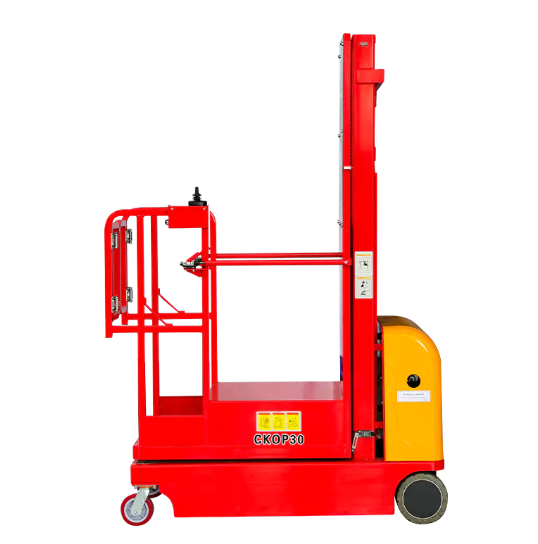
The lifting, movement and steering of the CKOP30 CKOP35 CKOP40 CKOP45 self-propelled full electric high altitude reclaim...
The CKOPY27 CKOPY33 CKOPY40 CKOPY45 half-electric high-altitude reclaimer is only powered by batteries for lifting, and ...
The mini electric mobile scissor lift with universal wheel integrates lifting, walking and operation functions. It adopt...
The CKJC0705EH CKJC0604EH CKJC0503EH mini electric hydraulic steering mobile scissor lift is designed for efficient oper...

