
 English
 Español
 عربى

CKJC0705EH CKJC0604EH CKJC0503EH Mini Electric Hydraulic steering Mobile Scissor Lift
The CKJC0705EH CKJC0604EH CKJC0503EH mini electric hydraulic steering mobile scissor lift is designed for efficient oper...

Content
A 700 mm aisle, a 4 m ceiling and a 180 kg pump that has to come down twice a shift: that combination, not the catalogue cover, decides which machine you need. A mobile hydraulic lift platform is a scissor-style work platform on wheels, raised by an electro-hydraulic power unit, that one operator can reposition between jobs without calling a rigger. Buy one when the height you need to reach changes location during the day. If the work never moves, a fixed lift table or a permanent goods lift is cheaper, more stable and easier to certify.
Some buyers arrive looking for something smaller: a hydraulic lift table on castors, usually 150 kg to 1,000 kg on the deck, with a push handle and a foot-operated pump. That is the light end of the same family, and it is excellent for moving heavy parts between benches. It is not a substitute for a guarded work platform once a person has to stand on it at height.
The order that avoids expensive mistakes is simple: confirm the real working height, confirm what the deck must carry, decide how the machine travels to the work, then check that the building can take the weight. Most bad purchases get those four in the wrong order.
Platform height and working height are not the same figure. A machine listed as 6 m almost always means 6 m to the deck; add roughly 2 m for a standing operator's reach, so practical working height is about 8 m. If the job needs hands-on work at 7.5 m, a "6 m" platform is the right size and a "4 m" machine is not. Sizing on platform height alone is the single most common first-year mistake.
Rated load is the second trap. The plate figure covers people, tools and material together. A 230 kg rating with two operators at 80 kg each leaves only 70 kg for tools and parts, which disappears quickly when someone carries a pump motor up with them. Extension decks make it worse: roll-out sections are frequently rated lower than the main deck, sometimes at half of it, so check the load chart rather than the brochure headline.
Three habits hold up in practice:
Mobility is where the money goes, and it is worth paying for only when the platform works in more than one place. A push-around unit at 400 kg and above becomes a two-person job on any kind of slope, so a cheaper machine can quietly cost more in labour over a year.
| Mobility type | How it travels | Best fit | Watch-outs |
|---|---|---|---|
| Push-around, manual or foot pump | Operator pushes; hydraulic pump raises the deck | One bay, flat concrete, occasional use | High push force above roughly 400 kg; slow over distance |
| Semi-electric | Battery-powered hydraulic lift; travel by hand | Installation and maintenance in a fixed area | Still needs an operator to move it; ramps are impractical |
| Full-electric self-propelled | Drive and steer from the deck, hydraulic lift and often hydraulic steering | Multi-stop work, warehouses, long travel distances | Higher purchase price, battery discipline, heavier footprint |
| Tracked or rough-terrain | Tracks or large pneumatic tyres, self-propelled | Unmade ground, outdoor slabs, uneven yards | Indoor floor damage; wider turning envelope |
Within the self-propelled group, steering design matters more than it looks. Hydraulic steering with a tight turning radius lets an operator rotate in a loading bay without a three-point shuffle, while universal-wheel configurations trade some of that precision for a smaller footprint and easier alignment along racking.
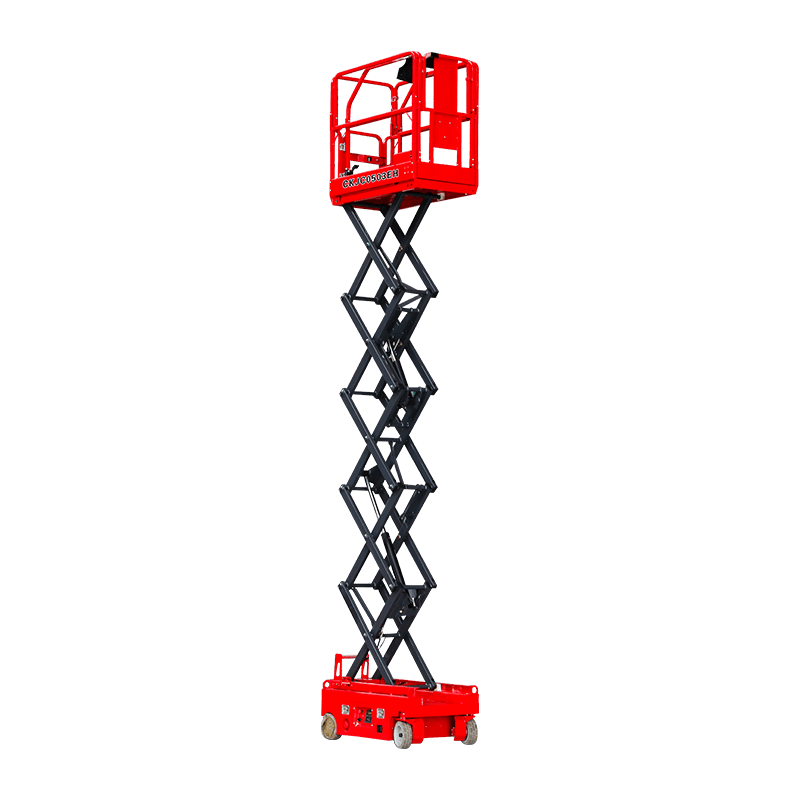 CKJC Series Mini Electric Hydraulic Steering Mobile Scissor LiftSelf-propelled electric scissor lift with hydraulic steering, built for medium- and low-altitude indoor and outdoor tasks in workshops, warehouses, and exhibition halls.View Product →
Castor and tyre material is the detail nobody quotes until the floor is marked. Polyurethane wheels protect epoxy and sealed concrete but slide on dust and wet steel plate; rubber gives grip outdoors but leaves scuff marks indoors. Ask for the wheel material and the wheel load in kilograms, not just the overall machine weight.
A machine that cannot reach the job is worthless, so measure the building before the specification. Narrow-body scissor platforms exist precisely because standard widths fail in older warehouse aisles, service corridors and mezzanine access doors.
A workable rule of thumb for straight-line travel is at least 300 mm of total clearance across the aisle, split between both sides. Tighter than that, the operator spends the shift watching the racking instead of the work, and the first contact usually takes a load beam or a sprinkler head with it. Also measure door frames, lift openings and any point where the platform must pass folded down, and remember that travel height is not the same as stowed height on every model.
 Hydraulic Self-Propelled Scissor Lift Aerial Work PlatformFor flat, solid ground and construction sites, this self-propelled hydraulic scissor lift reaches up to 16 m and supports 500 kg platform loads.View Product →
Floor capacity is the second building constraint, and it is usually underestimated. Four small wheels concentrate the same machine weight into a much smaller contact area than a wide-tyred unit, so a light machine can impose a higher point load than a heavier one. For suspended slabs, upper floors and mezzanine decks, request point-load data before delivery rather than after commissioning. Ramps deserve the same scrutiny: most self-propelled scissor platforms are rated for modest grades only, and the machine must be stowed to climb even those.
Semi-electric and full-electric platforms both use a battery and an electro-hydraulic power pack, but they behave differently across a shift. A semi-electric unit uses energy only to lift, so a single charge can last days in low-cycle work. A self-propelled machine spends battery on travel as well, which makes duty cycle the deciding number: count how many lifts and how many metres of travel happen in eight hours, then add a margin.
Practical points that decide whether the machine is available on Monday morning:
Certification is not a formality, it is the specification. Machines built to EN 280 or ISO 16368 and, for the North American market, ANSI A92.20, come with a Declaration of Conformity, a load chart and a manual. Ask for those three documents in your own language before the purchase order, not with the invoice.
On the machine itself, walk through this list:
Then plan the inspection regime. In the UK, lifting equipment used to lift people falls under LOLER and needs a thorough examination at least every six months; other jurisdictions set their own intervals, and a rental fleet should already have a paper trail. Daily pre-use checks plus documented annual examination is the baseline most insurers accept.
Warehouses are the clearest case. Order picking, cycle counting, lighting and rack repair all happen at multiple points in one shift, and a self-propelled platform removes the scaffolding cost from each task. Purpose-built stock pickers and warehouse high-altitude reclaimers are sized for this pattern, with deck heights such as the 3 m and 4 m variants in a picker range, and both semi-electric and full-electric options so that low-turnover sites are not paying for a drive system they never use.
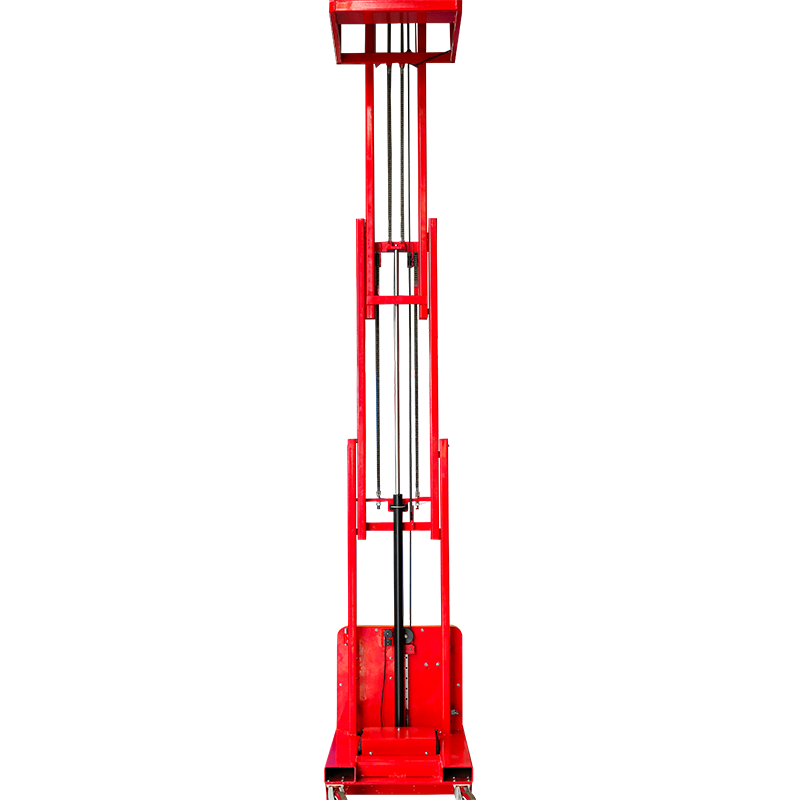 CKOP Series Self-Propelled Full Electric High-Altitude ReclaimerBattery-powered aerial order picker/reclaimer for warehouse and logistics tasks, with 0-degree turning radius and 300 kg safe working load.View Product →
Construction and facility maintenance follow the same logic: scissor platforms for flat slab work, aluminium mast platforms where floor loading is the limiting factor, and rough-terrain machines kept strictly outdoors. When none of the catalogue sizes fits, the sensible route is a custom platform rather than a workaround with blocking under the wheels, which is how incidents start.
A machine that is right for the aisle, the floor and the shift pattern will be quietly productive for a decade. One chosen on platform height alone usually ends up parked with a flat battery and a dented guardrail.
Zhejiang Wizplus Smart Equipment Ltd. builds scissor lifts, aluminium mast platforms, order pickers, warehouse reclaimers and custom lifting platforms at its site in Deqing, Huzhou, where laser cutting, CNC bending, robotic welding and an automated paint line run under one roof. The company also takes on non-standard work, which matters when a load or a ceiling falls between standard sizes. If you want a second opinion first, this guide to matching a hydraulic lift to a workshop is a useful cross-check on the same criteria. Otherwise, send the aisle width, ceiling height, load and duty cycle, and the specification question answers itself.
The CKJC0705EH CKJC0604EH CKJC0503EH mini electric hydraulic steering mobile scissor lift is designed for efficient oper...
The hydraulic self-propelled scissor lift aerial work platform can be easily driven and moved on flat and solid ground a...
This self-propelled single mast aluminum alloy lift platform is built with high-strength aluminum alloy, offering a ligh...
The mini electric mobile scissor lift with universal wheel integrates lifting, walking and operation functions. It adopt...

