
 English
 Español
 عربى
عربى

CKJC0705EH CKJC0604EH CKJC0503EH Mini Electric Hydraulic steering Mobile Scissor Lift
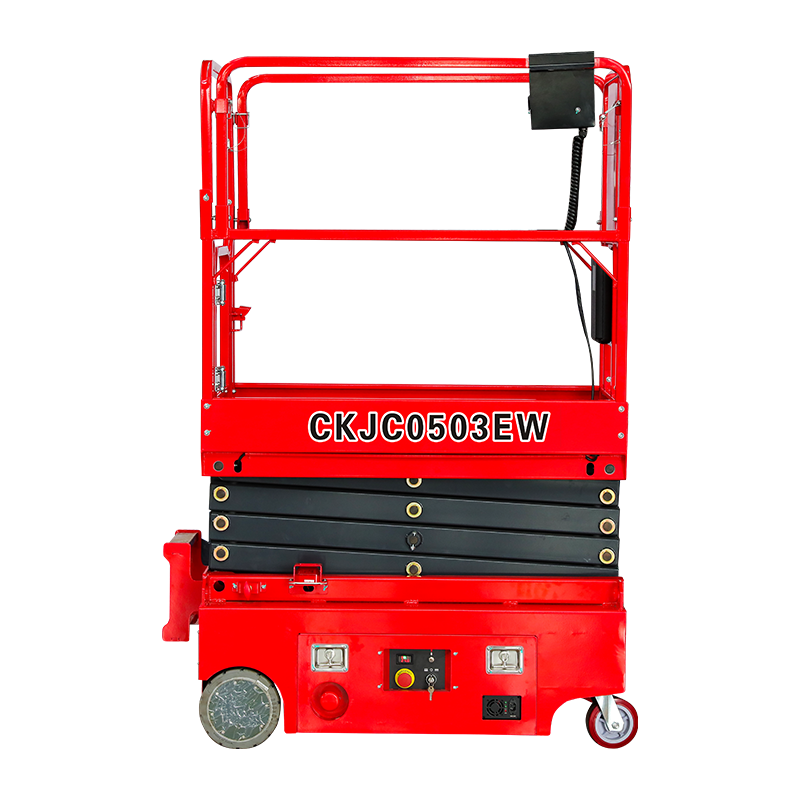
The CKJC0705EH CKJC0604EH CKJC0503EH mini electric hydraulic steering mobile scissor lift is designed for efficient oper...

Content
Hydraulic lift systems leverage fluid power principles to achieve controlled vertical motion with high force multiplication. This technical examination covers engineering fundamentals, application-specific configurations, and manufacturing quality standards essential for B2B procurement in automotive, industrial, and logistics sectors.
Hydraulic systems operate on pressure transmission through confined fluid. Force multiplication equals the ratio of piston areas, enabling compact actuators to generate substantial lifting capacity. System pressure typically ranges 15-25 MPa (2,200-3,600 psi) for industrial applications.
Hydraulic vs. Mechanical Systems:
| Parameter | Hydraulic Drive | Mechanical Screw Drive | Pneumatic Drive |
| Force Density | Very High (25 MPa) | Moderate (mechanical advantage) | Low (0.7 MPa max) |
| Positioning Accuracy | ±0.5mm (with servo valves) | ±0.1mm (ball screw) | ±2.0mm (compressibility) |
| Speed Control | Infinite, smooth | Discrete steps or variable | Fast, less controllable |
| Overload Protection | Pressure relief valves | Mechanical clutches | Pressure regulators |
| Efficiency | 75-85% | 60-70% | 20-30% |
| Maintenance Interval | 2,000 hours (fluid change) | 5,000 hours (greasing) | 1,000 hours (dryer service) |
Modern lifts employ closed-center load-sensing systems for energy efficiency. Variable displacement piston pumps adjust flow to demand, reducing heat generation and power consumption by 30-40% compared to constant-volume systems.
Hydraulic lift for car repair shop applications demands specific configurations based on service bay layout and vehicle throughput requirements. Post selection determines accessibility and workflow efficiency.
Two-post designs utilize adjustable swing arms for wheel-free access, requiring precise vehicle center-of-gravity positioning. Four-post configurations support drive-on operation with integrated runways, enabling wheel alignment services.
Automotive Lift Specifications:
| Configuration | Two-Post Symmetric | Two-Post Asymmetric | Four-Post |
| Rated Capacity (kg) | 3,000-4,000 | 3,000-4,500 | 3,500-12,000 |
| Lift Height (mm) | 1,800-2,000 | 1,900-2,100 | 1,700-2,500 |
| Bay Width Requirement (mm) | 3,400-3,800 | 3,200-3,600 | 3,000-3,500 |
| Concrete Thickness (mm) | 200 (min 3000 psi) | 200 (min 3000 psi) | 150 (floor-mounted) |
| Primary Application | General repair, tire service | Body work, door access | Alignment, heavy trucks |
| Installation Time (hours) | 6-8 | 6-8 | 4-6 |
Vehicle positioning affects column loading. Asymmetric arm configurations position the vehicle 30% rearward, improving door clearance but requiring verification that 85% of rated capacity is not exceeded at any single post.
Portable hydraulic lift for garage applications addresses space constraints and multi-vehicle flexibility. Mobility engineering must balance transportability with stability under load.
Portable units utilize integrated casters (200mm diameter, polyurethane wheels, 500kg dynamic load rating) with mechanical drop-down stabilizers. Caster retraction and jack deployment must occur sequentially to prevent instability.
Portable Lift Engineering Parameters:
| Specification | Mini Lift (Pneumatic/Hydraulic) | Mid-Rise Scissor | Full-Rise Portable |
| Capacity (kg) | 2,500 | 2,800-3,000 | 3,000-3,500 |
| Lift Height (mm) | 600-800 | 1,000-1,200 | 1,800-2,000 |
| Unit Weight (kg) | 150-200 | 350-450 | 800-1,200 |
| Power Requirement | Shop air (0.6 MPa) or 220V | 220V single-phase | 380V three-phase |
| Setup Time (minutes) | 5-10 | 15-20 | 30-45 |
| Stabilizer Footprint (mm) | 2,000 × 1,800 | 2,400 × 2,000 | 3,000 × 2,800 |
Portable lifts require tip-over testing per ANSI/ALI ALCTV-2017. Stability margin demands that the unit resists overturning moment when loaded to 150% capacity with the platform fully extended and centered at the platform edge.
Hydraulic lift table for warehouse installations optimize ergonomic material handling, reducing worker injury risk while increasing throughput efficiency. Vertical travel range and platform dimensions determine application suitability.
Lift tables eliminate bending and lifting injuries by positioning loads at optimal working height (typically 750-950mm for standing operations, 650-750mm for seated work). Integration with conveyor systems requires precise elevation matching (±5mm).
Our smart logistics equipment series addresses these requirements, widely used in industrial and commercial logistics fields. Platform configurations accommodate standard pallet dimensions (1,200 × 1,000mm) with 2,000-4,000kg capacity ranges.
Warehouse applications demand high-cycle durability. Standard duty (8 cycles/hour) utilizes single-acting cylinders with gravity descent. High-duty applications (20+ cycles/hour) require double-acting cylinders with powered descent and oil coolers to manage thermal loads.
Selecting a heavy duty hydraulic lift manufacturer requires verification of structural engineering capabilities, welding qualifications, and quality management systems. Load-bearing structures demand rigorous fabrication standards.
Heavy-duty platforms (5,000kg+ capacity) utilize Q345B structural steel (yield strength 345 MPa) with box-section construction. Weld procedures follow AWS D1.1 or EN ISO 15614-1 with 100% ultrasonic testing of critical joints.
Zhejiang Wizplus Smart Equipment Ltd. was founded in 2021 and is located in the Provincial Economic and Technological Development Zone of Deqing County, Huzhou City, Zhejiang Province, China. The company covers an area of 40,000 square meters, including a factory of 20,000 square meters. Our steel structure factory is 20 meters high, and the concrete structure factory is 11 meters high, equipped with 50-ton and 16-ton cranes, specifically designed for the production of large metal structural parts while being suitable for the manufacture of various sizes of metal structural parts.
Heavy-Duty Manufacturing Specifications:
| Component | Material Grade | Fabrication Method | Quality Verification |
| Platform Deck | Q345B, 6-8mm plate | Laser cutting, CNC bending | Dimensional inspection ±1.0mm |
| Scissor Arms | Q345B, rectangular tube | Robot welding, stress relief | UT inspection, weld profile |
| Cylinder Barrels | 27SiMn seamless tube | Honing, chrome plating | Surface roughness Ra 0.4 |
| Piston Rods | 45# steel, induction hardened | Hard chrome plating (25μm) | Hardness 60-65 HRC |
| Hinge Pins | 40Cr, quenched and tempered | CNC turning, grinding | Hardness 28-32 HRC core |
We have an experienced design and production team with professionals who have been dedicated to the industry for decades. It is an equipment manufacturing company integrating R&D, design and production. Structural calculations follow FEM 1.001 and EN 1993 (Eurocode 3) standards, with finite element analysis validating stress concentrations at critical joints.
Hydraulic scissor lift for industrial use employs linked parallelogram mechanisms to achieve vertical motion with high stability. Scissor geometry determines lifting ratio and force requirements.
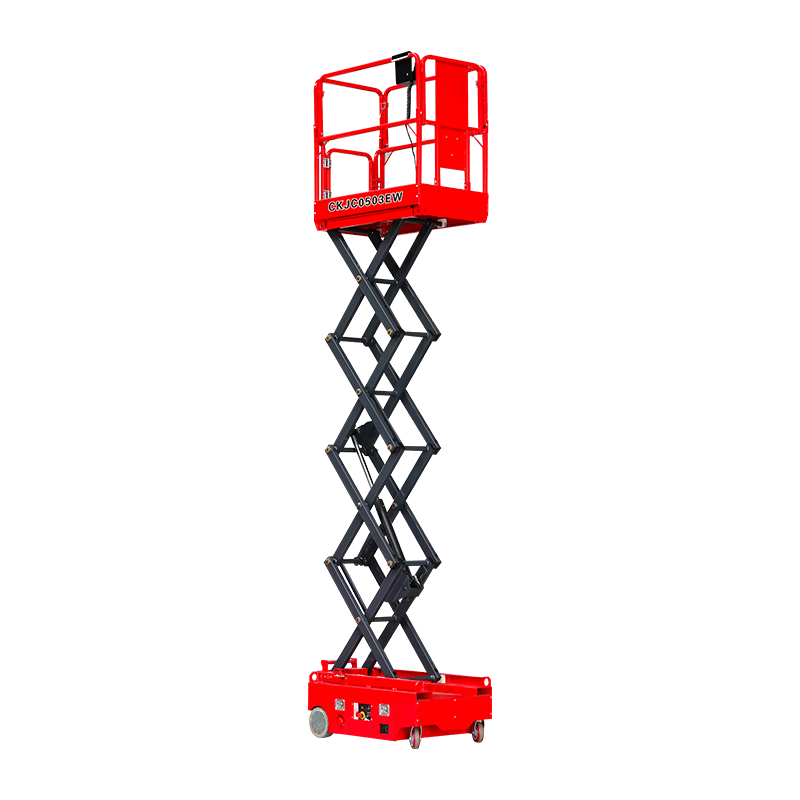
Scissor lifts utilize multiple linked pantograph arms. The mechanical advantage varies with extension: retracted position requires maximum force (low mechanical advantage), while extended position operates at reduced pressure (high mechanical advantage).
Scissor Configuration Analysis:
| Configuration | Single Scissor | Double Scissor | Triple Scissor |
| Lift Ratio (retracted:extended) | 1:2.0 | 1:3.8 | 1:5.5 |
| Maximum Height (mm) | 3,000 | 6,000 | 12,000 |
| Platform Size (typical) | 1,800 × 1,000 | 2,000 × 1,200 | 2,400 × 1,500 |
| Cylinder Force (retracted, kN) | 50-80 | 80-120 | 120-180 |
| Side Load Capacity (N) | 500 (static) | 300 (static) | 200 (static) |
| Typical Application | Workshop maintenance | Warehouse picking | Aerial installation |
Our company's products cover a series of professional high-tech equipment, such as aerial work platforms, smart logistics, and smart agriculture, which is widely used in many fields such as construction, industrial and commercial logistics, agriculture. Scissor lifts for aerial work incorporate guardrails (1,100mm height), toe boards (150mm), and emergency lowering systems. Platform leveling maintains ±1.5° inclination across full extension.
Manufacturing quality depends on equipment capability and process control. High-power laser cutting ensures edge quality for welded assemblies, while robotic welding maintains consistency across production batches.
The company is equipped with various high-end production facilities, including 12000W high-power laser cutting machines, 4000W fully automatic laser pipe cutting machines, 300-ton CNC bending machines, fully CNC intelligent pipe bending machines, a welding robot assembly line, CNC lathes, a large-scale intelligent painting assembly line with the capability of spraying paint, spraying plastic, and electrophoresis on large equipment, as well as an intensified testing equipment and experimental center for various products and accessories.
Manufacturing Process Specifications:
| Process | Equipment Specification | Capability | Tolerance |
| Plate Cutting | 12,000W fiber laser | Up to 25mm mild steel | ±0.1mm |
| Tube Cutting | 4,000W automatic laser | Φ20-Φ200mm, 6m length | ±0.15mm |
| Bending | 300-ton CNC press brake | 4,000mm length, 12mm thickness | ±0.5° angle |
| Welding | Robot line (6-axis) | Continuous MIG/MAG | ISO 5817 Class B |
| Surface Finish | Intelligent painting line | Paint, powder coat, e-coat | 80-120μm thickness |
Our intensified testing equipment and experimental center validates product performance through static load testing (125% rated capacity), dynamic cycling (10,000 cycles), and environmental exposure (salt spray, temperature cycling).
Export markets demand compliance with regional standards (CE marking for Europe, ANSI for North America, AS for Australia). Documentation packages include structural calculations, weld procedures, and material certifications.
The company's products are exported to many countries and regions such as Europe, America, the Middle East and Southeast Asia, and have received consistent recognition from international clients. At the same time, the company actively develops the domestic market, has hundreds of distributors, and has a complete sales and after-sales service network.
Comprehensive service networks provide spare parts availability (10-year commitment for critical components), technical documentation, and field service support. Remote diagnostic capabilities enable troubleshooting via IoT-enabled hydraulic monitoring systems.
The company has always been adhering to the core concepts of professionalism, innovation, integrity and efficiency, actively responding to new development concepts such as green and low-carbon, insisting on the product design concepts of electrification, greening and intelligence, and comprehensively improving the quality of company's products. We sincerely welcome users and friends at home and abroad to visit the company for communication and cooperation. Let's promote the high-level development of the aerial work industry and create a better future together.
Rated capacity is determined through static testing at 125% of rated load (per EN 1494 or ASME B30.1), followed by dynamic testing at 110% rated load through full travel cycles. Structural design incorporates safety factors of 2.0 for steel components (yield strength basis) and 3.0 for hydraulic cylinders (burst pressure basis). Heavy duty hydraulic lift manufacturer certification requires third-party witnessing of these tests. Our testing center conducts 100% pressure testing of cylinders at 1.5x working pressure before assembly.
Standard applications utilize ISO VG 46 hydraulic oil with viscosity index >95. Low-temperature environments (-20°C) require VG 32, while high-temperature operations (>60°C ambient) benefit from VG 68. Fluid analysis should occur every 2,000 operating hours or annually, checking for particle contamination (ISO 4406 18/16/13 max), water content (<0.1%), and oxidation (acid number <0.5 mg KOH/g). Filter elements require replacement at 500 hours or when differential pressure exceeds 0.5 bar.
Yes, hydraulic scissor lift for industrial use customization includes platform dimensions (up to 6m × 3m), capacity increases (up to 20,000kg), specialized coatings (stainless steel for food processing, explosion-proof for hazardous areas), and integration features (roller conveyors, turntables, tilt functions). Custom lift tables for warehouse automation may include automated positioning (±2mm accuracy) and integration with WCS (Warehouse Control Systems). Development lead time for custom designs ranges 8-12 weeks following design approval.
Two-post hydraulic lift for car repair shop installations require 200mm minimum concrete thickness at 3000 psi (20.7 MPa) compressive strength, with 1% reinforcement. Four-post lifts may utilize surface-mounted configurations with appropriate floor loading (minimum 150mm concrete). Soil-bearing capacity must exceed 150 kPa; poor soil conditions require engineered footings. Anchor bolts (M16-M24, grade 8.8) require epoxy installation with 100mm minimum embedment depth. Post-installation verification includes pull-testing at 50% of bolt yield load.
Portable hydraulic lift for garage stability relies on low center-of-gravity design and extended base dimensions. Stabilizer jacks (screw or hydraulic) transfer load directly to the floor, bypassing caster wheels during lifting operations. Stability calculations ensure the overturning moment (load × horizontal distance from center) remains below 75% of resisting moment (unit weight × base radius). Interlock systems prevent lift operation unless all stabilizers are fully deployed and confirmed via limit switches. Floor loading must not exceed 3.5 MPa to prevent concrete crushing.
The CKJC0705EH CKJC0604EH CKJC0503EH mini electric hydraulic steering mobile scissor lift is designed for efficient oper...
The hydraulic self-propelled scissor lift aerial work platform can be easily driven and moved on flat and solid ground a...
This self-propelled single mast aluminum alloy lift platform is built with high-strength aluminum alloy, offering a ligh...
The mini electric mobile scissor lift with universal wheel integrates lifting, walking and operation functions. It adopt...

