
 English
 Español
 عربى
عربى

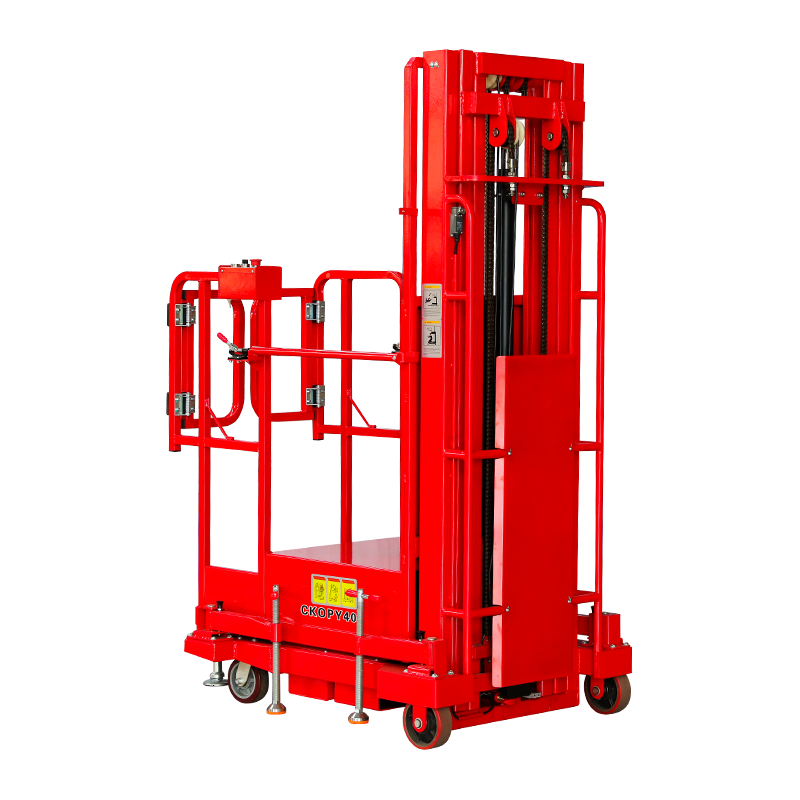
AM-S06 AM-S75 Self-Propelled Single-Mast Lift Platform
This self-propelled single mast aluminum alloy lift platform is built with high-strength aluminum alloy, offering a ligh...

Content
Tracked spider lifts are self-propelled aerial work platforms mounted on rubber or steel crawler tracks and supported by articulating outrigger legs that spread radially from the machine base — resembling a spider's legs in deployment, hence the name. Unlike conventional boom lifts or scissor lifts that require firm, level ground and wide access routes, tracked spider lifts combine compact transport dimensions, low ground bearing pressure, and all-terrain mobility to access elevated work positions in environments where no other platform type can operate safely or practically.
For construction contractors, arboricultural professionals, facility managers, and aerial work platform distributors, understanding the engineering principles, application boundaries, and procurement considerations of tracked spider lifts is essential for making technically sound and commercially justified equipment decisions. This guide provides a comprehensive, engineer-level analysis of the complete tracked spider lift category.
The defining structural feature of a tracked spider lift is its outrigger stabilizer system. Four independently articulating legs extend from the machine chassis at configurable angles and lengths, allowing the platform to be leveled and stabilized on severely uneven terrain — gradients of up to 35° during travel and up to 15° at the work position are achievable with advanced models. Each outrigger foot pad contacts the ground independently, with hydraulic pressure in each leg cylinder automatically adjusted by the control system to distribute the machine's total weight and working load across all four contact points.
This distributed load architecture is the engineering basis for the tracked spider lift's ability to work on ground bearing capacities as low as 3–5 kg/cm² — ground that would be penetrated and destabilized by the concentrated axle loads of conventional boom lifts requiring 8–15 kg/cm² bearing capacity. The stabilizer leg span in full deployment typically ranges from 3.5 m to 6.5 m depending on machine class, with some models offering partial deployment configurations for confined site conditions.
The crawler track system provides the tracked spider lift's all-terrain mobility during transport between work positions. Two track configurations are available, each suited to different operating environments:
Track width is a critical specification for access-constrained applications. Compact tracked spider lifts designed for indoor or narrow-gate access have transport widths as low as 0.75–0.99 m, allowing passage through standard single doorways (min. 800 mm clear opening) without structural modification.
Modern tracked spider lifts use one of three power architectures, selected based on the application's emissions, noise, and operational cost requirements:
The rated platform capacity of commercial tracked spider lifts typically ranges from 200 kg to 450 kg (platform load, including operators and tools). Stability is maintained through a combination of the outrigger geometry, the machine's electronic stability monitoring system (which continuously calculates the tipping moment based on platform position, load, and outrigger deployment state), and mechanical overload protection that prevents platform movement if the calculated stability margin falls below a defined safety threshold.
The stability envelope of a tracked spider lift is three-dimensional: working height, horizontal outreach, and platform load are all interdependent variables. Maximum outreach is only achievable at reduced working height and reduced platform load — manufacturers publish three-dimensional stability charts (or interactive digital tools) that define the safe operating envelope for every combination of these variables.
The narrow tracked spider lift for indoor use is engineered around a single overriding constraint: the ability to enter, maneuver within, and exit buildings through standard doorways and corridors without structural modification. This drives a cascade of design requirements that differentiate indoor spider lifts from general-purpose models:
A tracked spider lift for rough terrain access prioritizes mobility performance over compactness, with track systems, ground clearance, and power systems optimized for challenging outdoor terrain. Key performance specifications for rough terrain models include:
| Parameter | Compact Indoor Model | Rough Terrain Model |
|---|---|---|
| Maximum travel gradient | 20–25° | 30–35° |
| Ground clearance | 80–120 mm | 150–250 mm |
| Track width (each) | 150–200 mm | 250–400 mm |
| Travel ground pressure | 0.3–0.5 kg/cm² | 0.4–0.8 kg/cm² |
| Obstacle clearance height | 80–100 mm | 150–200 mm |
| Power system | Full electric | Diesel-electric hybrid or diesel |
| Working height (typical) | 12–25 m | 20–50 m |
Arboriculture represents one of the most technically demanding applications for tracked spider lifts, combining the rough terrain access requirements of outdoor woodland environments with the precision positioning requirements of working within tree canopies. The best tracked spider lift for tree surgery combines several specific capabilities:
| Feature | Full Electric | Diesel-Electric Hybrid | Pure Diesel |
|---|---|---|---|
| Emissions at point of use | Zero | Zero (electric mode) / Low (generator mode) | High |
| Noise level | Very low (<70 dB) | Low (electric) / Medium (generator) | High (85–95 dB typical) |
| Operating cost per hour | Lowest | Medium | Highest (fuel + maintenance) |
| Runtime between charges/refuels | 6–10 hours (battery dependent) | Unlimited (with fuel) | Unlimited (with fuel) |
| Indoor use permitted | Yes | Electric mode only | No |
| Cold weather performance | Reduced (battery capacity) | Good | Excellent |
| Best application | Indoor, urban, noise-sensitive | Mixed indoor/outdoor, remote sites | Remote heavy-duty outdoor |
The spider lift vs boom lift comparison begins at the fundamental level of machine architecture. A conventional boom lift (telescopic or articulating) is mounted on a wheeled chassis with a fixed axle configuration — designed for rapid travel on firm, paved surfaces. A tracked spider lift combines a crawler undercarriage with a radially deployable outrigger system that creates a stable working base independent of the terrain beneath the tracks. This architectural difference produces fundamentally different performance profiles across all key application parameters.
| Parameter | Tracked Spider Lift | Telescopic Boom Lift | Articulating Boom Lift |
|---|---|---|---|
| Maximum working height | 12–50 m (commercial range) | 12–67 m | 12–43 m |
| Maximum horizontal outreach | 8–20 m | 15–30 m | 10–22 m |
| Up-and-over capability | Excellent (articulating jib) | Limited | Good |
| Below-ground access | Yes (with jib articulation) | No | Limited |
| 360° continuous rotation | Yes (standard) | Yes (standard) | Yes (standard) |
| Platform capacity | 200–450 kg | 230–680 kg | 230–450 kg |
Ground bearing pressure is the dimension in which the tracked spider lift most decisively outperforms conventional boom lifts. A typical 20 m telescopic boom lift has an operating weight of 12,000–18,000 kg concentrated through four rubber tyres with a combined contact area of 800–1,200 cm², producing ground pressures of 10–22 kg/cm² — far exceeding the bearing capacity of soft ground, landscaped areas, or typical commercial floor slabs. By contrast, a tracked spider lift for rough terrain access of equivalent working height weighs 3,500–7,000 kg distributed across four outrigger pads with a total contact area of 1,200–2,000 cm², producing working ground pressures of 2–6 kg/cm². This 3–5× reduction in ground pressure is what enables tracked spider lifts to work safely on surfaces that would be inaccessible to any wheeled platform.
| Application Scenario | Tracked Spider Lift | Telescopic Boom Lift | Articulating Boom Lift |
|---|---|---|---|
| Indoor narrow access | Excellent | Not suitable | Not suitable |
| Soft ground / landscaped areas | Excellent | Poor | Poor |
| Steep slope access (25°+) | Excellent | Not suitable | Not suitable |
| Up-and-over obstacles | Excellent | Poor | Good |
| Large open construction site | Good | Excellent | Good |
| High outreach (>20 m) | Limited | Excellent | Good |
| Heritage / sensitive surfaces | Excellent | Not suitable | Not suitable |
| Tree surgery / arboriculture | Excellent | Poor | Limited |
Tracked spider lifts serve construction and building maintenance applications that combine elevated access requirements with access constraints that exclude conventional platforms. Facade restoration on heritage buildings — where ground-bearing capacity is limited by historic foundations and surface damage to stone paving is unacceptable — is a primary use case. Internal atrium maintenance in commercial buildings, where the narrow tracked spider lift for indoor use must pass through standard doorways and work at heights of 15–30 m over occupied floors, represents one of the highest-value applications in the commercial building maintenance sector.
The arboricultural sector has been transformed by the availability of tracked spider lifts capable of accessing tree locations through residential gardens, public parkland, and woodland environments that were previously accessible only via rope climbing techniques. The best tracked spider lift for tree surgery eliminates the fall risk associated with rope access, allows a single operator to work productively at heights of 20–30 m for a full working day, and enables precision crown reduction, deadwood removal, and canopy thinning operations that are difficult or impossible to execute safely from ropes alone.
High-bay warehouse and industrial facility maintenance — lighting replacement, sprinkler system inspection, structural inspection, and HVAC servicing at heights of 10–25 m — represents a growing market for narrow tracked spider lifts for indoor use. The ability to work between racking aisles as narrow as 1.2–1.5 m, on concrete floors without outrigger mat protection, and with zero emissions in food-grade or pharmaceutical environments makes the electric spider lift the preferred platform type for a growing number of facility management contractors.
Events and film production require elevated camera and lighting positions that must be established on soft ground, finished event surfaces, or within temporary structures — environments where conventional boom lifts cause unacceptable surface damage. Infrastructure inspection (bridge soffits, dam faces, tunnel linings) frequently requires up-and-over access geometry and operation on sloped or uneven approach surfaces where only a tracked spider lift for rough terrain access can achieve the required positioning.
The primary selection parameters for any tracked spider lift are the maximum working height and horizontal outreach required for the intended application. Working height should be specified as the highest point the platform operator's hands must reach — typically 2 m above the platform floor — adding a 2 m safety margin above the highest work point to account for boom deflection and measurement uncertainty. Horizontal outreach should reflect the maximum distance the platform must be positioned away from the machine's center of stabilizer deployment to clear obstacles or reach work positions that cannot be directly overstood.
The interaction between height and outreach within the stability envelope must be verified: many tracked spider lifts achieve maximum working height only at reduced outreach, and maximum outreach only at reduced height. Confirm that the required combination of height and outreach simultaneously falls within the manufacturer's published stability envelope before finalizing model selection.
After working envelope confirmation, site access constraints typically determine the shortlist of viable machine models:
Select the power architecture based on the primary operating environment and any regulatory or contractual restrictions:
The tracked spider lift rental vs purchase decision is primarily a utilization and capital efficiency calculation. The key financial parameters are:
| Factor | Rental | Purchase |
|---|---|---|
| Upfront capital requirement | None (operational expense) | High ($80,000–$500,000+ depending on class) |
| Break-even utilization | N/A | Typically 100–150 days/year to justify ownership |
| Maintenance responsibility | Rental company | Owner (significant ongoing cost) |
| Technology currency | Always current model available | Owned asset depreciates and becomes obsolete |
| Availability risk | Availability not guaranteed at peak demand | Always available when owned and maintained |
| Certification and compliance | Rental company responsibility | Owner responsibility (LOLER, PUWER, etc.) |
| Best for | Occasional use, project-specific, capital-constrained | High utilization, recurring specialist work, fleet operations |
For contractors using a tracked spider lift more than 100–150 days per year on a consistent basis, purchase economics typically outperform rental. Below this utilization threshold — or where the required machine specification varies significantly between projects — rental from a specialist aerial work platform hire company is usually the more capital-efficient approach.
All commercial tracked spider lifts sold in regulated markets must comply with the applicable product safety standard:
Type approval and third-party certification against the applicable standard must be documented by the manufacturer and verifiable by the purchasing organization. CE marking (for European market supply) requires a Notified Body to conduct type examination and issue an EC Type-Examination Certificate before the manufacturer can affix the CE mark and issue a Declaration of Conformity.
Operating a tracked spider lift requires formal training and certification in all major regulatory jurisdictions:
Every tracked spider lift must be inspected before each working period by the operator. A compliant pre-use inspection covers:
Correct outrigger deployment is the most safety-critical operational procedure for tracked spider lifts. Incorrect setup — on ground with insufficient bearing capacity, on slopes exceeding the machine's rated working gradient, or with outrigger pads on unstable fill or voids — is a leading cause of MEWP overturning incidents. Required setup procedure:
Zhejiang Wizplus Smart Equipment Ltd. was founded in 2021 in the Provincial Economic and Technological Development Zone of Deqing County, Huzhou City, Zhejiang Province, China. The company covers an area of 40,000 square meters, including a 20,000 square meter factory specifically designed for large metal structural part production — with a steel structure factory 20 meters high and a concrete structure factory 11 meters high, equipped with 50-ton and 16-ton overhead cranes to handle the large-scale assemblies required for tracked spider lift manufacturing.
Wizplus's production infrastructure includes 12,000W high-power laser cutting machines, 4,000W fully automatic laser pipe cutting machines, 300-ton CNC bending machines, fully CNC intelligent pipe bending machines, a welding robot assembly line, CNC lathes, and a large-scale intelligent painting assembly line capable of spraying paint, spraying plastic, and electrophoresis on large equipment — the complete manufacturing technology stack required to produce precision, high-quality tracked spider lifts at scale.
This self-propelled single mast aluminum alloy lift platform is built with high-strength aluminum alloy, offering a ligh...
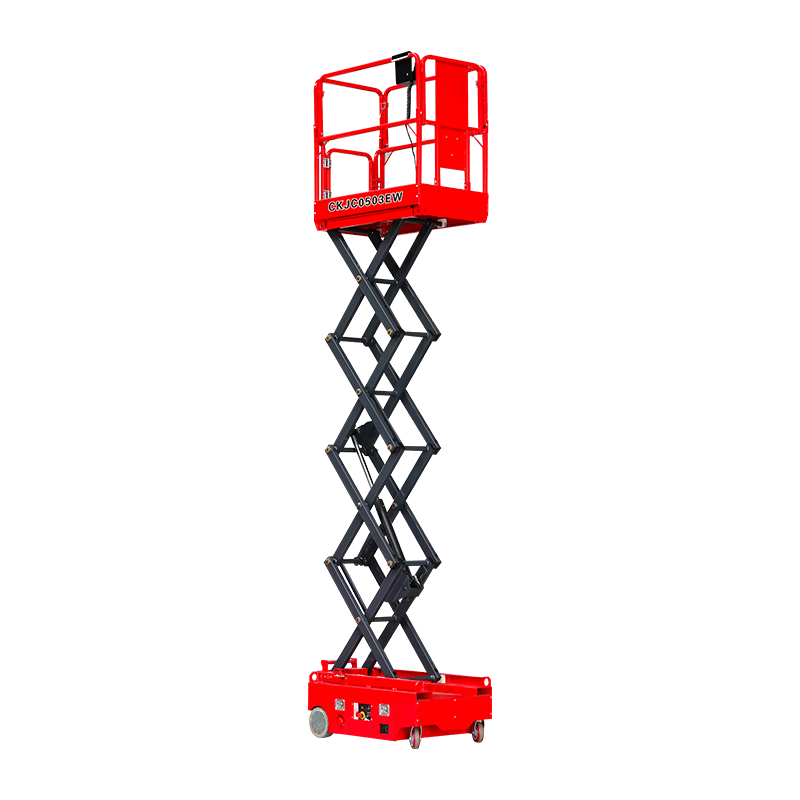
The mini electric mobile scissor lift with universal wheel integrates lifting, walking and operation functions. It adopt...
The CKJC0705EH CKJC0604EH CKJC0503EH mini electric hydraulic steering mobile scissor lift is designed for efficient oper...
The hydraulic self-propelled scissor lift aerial work platform can be easily driven and moved on flat and solid ground a...

