
 English
 Español
 عربى

CKJC0705EW CKJC0604EW CKJC0503EW Mini Electric Mobile Scissor Lift with Universal Wheel
The mini electric mobile scissor lift with universal wheel integrates lifting, walking and operation functions. It adopt...

Content
A 4.5 m mini scissor lift bought for a mezzanine aisle will not reach a 9 m warehouse ceiling, and a 12 m machine that cannot pass a 1.2 m door frame is just as expensive a mistake. The practical way to narrow the electric mobile lift work platform market is to fix four numbers before opening any brochure: required working height, rated load, machine weight against the floor it will travel on, and the smallest gap it has to squeeze through. Battery type, steering style and deck extension are second-order decisions that follow from those four.
This guide covers how the category is organised, which specifications actually control the choice, and the site conditions that most often rule out an otherwise suitable machine.
An electric mobile lift work platform is a battery-powered unit that travels with a person and tools on the deck, as opposed to a fixed lift, a towed trailer, or a diesel rough-terrain machine. Four families share the same electric drive and hydraulic lift logic but are engineered for different jobs:
The commercial logic differs by family. Scissor lifts are usually specified and priced on deck size and lift height, while order pickers and reclaimers are specified on mast height, platform capacity and travel speed, because aisle geometry dictates the design. Comparing a scissor lift and a reclaimer on price alone tells you very little.
Five figures eliminate most unsuitable models before price enters the discussion.
| Specification | What to verify | Typical cost of a mismatch |
|---|---|---|
| Working height | Platform height plus roughly 2 m of reach; sized to the task, not the ceiling | Operators cannot reach the top fixing, or the taller model no longer clears doorways |
| Rated load | Capacity minus operator, tools and materials, including the reduced rating for an extended deck | Overload cut-outs trip mid-task and warranty claims are refused |
| Machine weight | Point load per wheel against slab, mezzanine or suspended-floor ratings | Floor damage, or the unit is confined to ground level |
| Footprint and turning radius | Narrowest door, aisle and lift entry the unit must pass at travel height | The machine cannot reach the work area at all |
| Battery and charge cycle | Shift length, recharge time, opportunity charging, battery chemistry | Mid-shift charging downtime and idle operators |
Floor loading is the specification buyers most often skip. A compact electric scissor lift may weigh under 1,500 kg, but that weight is concentrated on four small wheels, so the point load matters more than the total mass. On mezzanines, loading docks and older concrete, ask the supplier for a wheel-load figure and pass it to a structural engineer before ordering.
Once the five figures are fixed, the family usually selects itself.
A scissor lift earns its place when the work area is a flat slab, the task is directly overhead, and the deck must carry two people plus materials. For interior fit-out, lighting replacement and sprinkler work, a platform height between 4 m and 8 m covers the majority of jobs. The limiting factor is nearly always access rather than reach, so measure the narrowest doorway and the turn into the work area before choosing a larger deck.
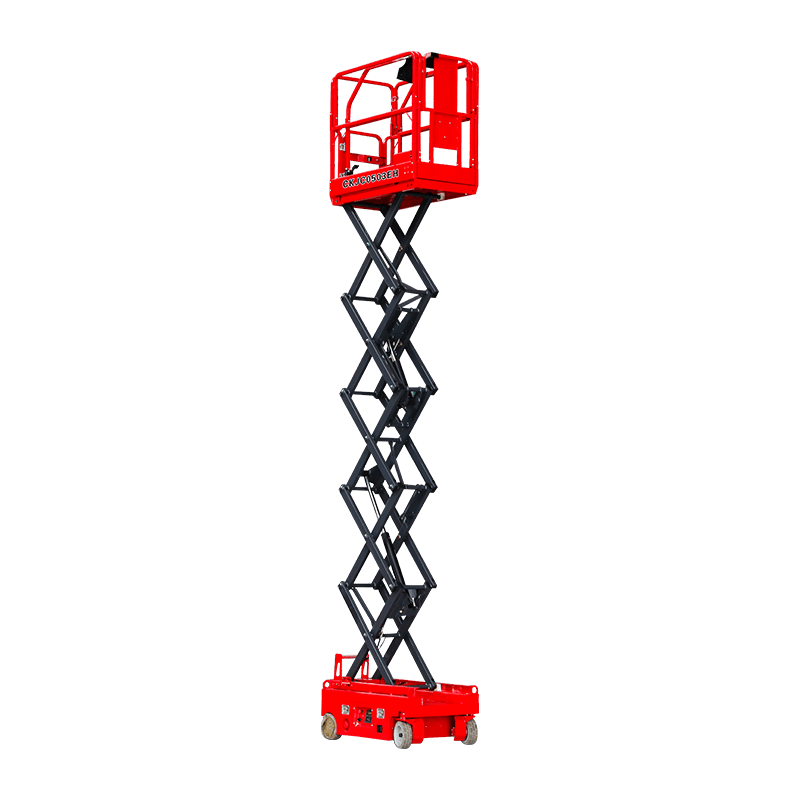 Mini Electric Hydraulic Steering Mobile Scissor LiftSelf-propelled electric scissor lift with hydraulic steering for indoor fit-out and overhead work where compact access and one-person operation matter.View Product →
Mini electric hydraulic steering units in the 5 m to 7 m class handle that trade-off by keeping the chassis compact while allowing powered steering, which matters when the operator repositions dozens of times per shift. Self-propelled travel also lets a single operator work without a second person pushing the machine.
When the job is picking rather than lifting, the platform must travel while the operator stands at the rack face. A 3 m or 4 m mobile stock picker typically reaches two or three rack levels without leaving the aisle, and the operator's upward movement replaces a ladder, a pallet and a trip to the ground for every pick.
 OPC-03 3M and OPC-04 4M Mobile Stock PickerSelf-propelled order picker for warehouse aisle picking, letting one operator lift and travel at rack face while considering aisle width and pallet footprint.View Product →
Specify the aisle width and the pallet footprint first. A picker that fits the aisle but cannot carry the pallet simply moves the bottleneck from the rack to the floor.
Above roughly 6 m, a mast-type high-altitude reclaimer is usually the better answer than a scissor lift, because the mast keeps the footprint small while the platform travels with the load. Full-electric self-propelled models suit high-throughput sites where travel distances are long; semi-electric versions are adequate where the unit stays close to one workstation and the operator can assist movement.
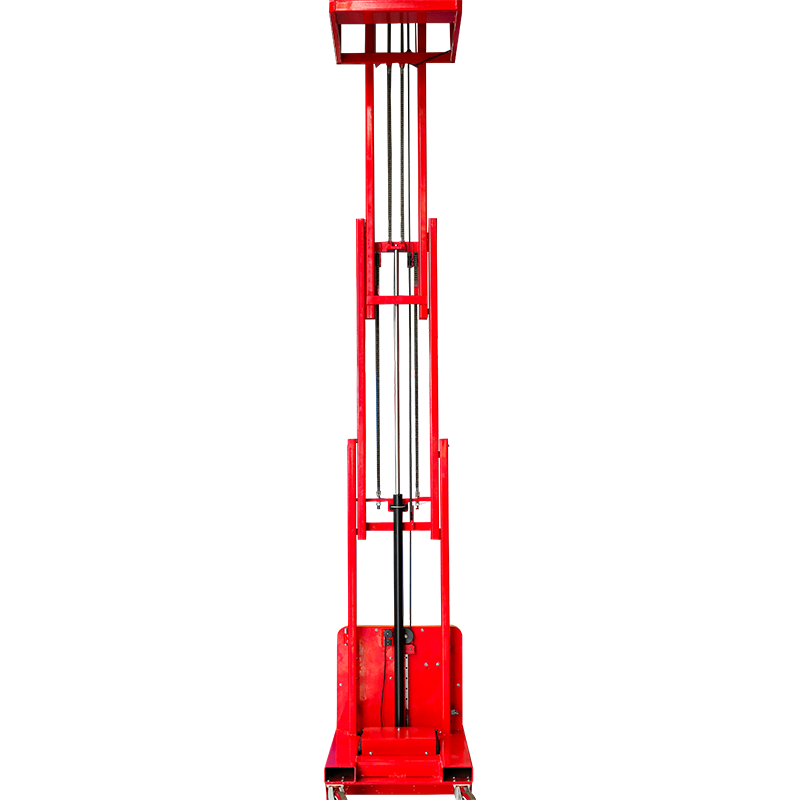 CKOP30 CKOP35 CKOP40 CKOP45 Self-Propelled Full Electric High-Altitude ReclaimerBattery-powered mast reclaimer for high-throughput warehouse picking above 6 m, with compact footprint and platform travel for narrow racking layouts.View Product →
Capacity, mast height and travel speed are the three figures to compare, and they should be read against the racking layout rather than the total warehouse area.
Two decisions inside the electric category change throughput more than any other specification.
Semi-electric versus full-electric. A semi-electric platform lifts on battery power but travels with manual assistance. It is lighter, cheaper and perfectly adequate when the machine stays within a few metres of a workstation. A full-electric self-propelled unit costs more, but it pays for itself wherever the machine moves more than roughly 20 m per reposition or the operator works alone. A simple rule: if repositioning takes longer than the task itself, the platform is under-specified.
Steering and wheels. Hydraulic steering tracks and turns predictably on smooth concrete and copes with small thresholds. Universal casters let a mini unit pivot in place, which is useful in congested service corridors. For narrow aisles, narrow-body models keep the overall width down without sacrificing deck length, and reviewing the scissor lift aerial work platform range by width before height is a habit worth keeping.
Charging strategy deserves the same attention. A unit with a 6 to 8 hour working cycle under mixed use needs a charging point near where it parks, adequate ventilation, and a decision on whether opportunity charging during breaks is permitted. Battery chemistry and charger type should be confirmed against the site's electrical supply before delivery, not after.
Before issuing a purchase order, walk the route the machine will take and collect the following.
Ask for the datasheet rather than the model name, and confirm the figures in writing. A short read of electric scissor lift platform selection and safety considerations before the meeting will help you ask about stability on slope, brake performance and battery cut-off behaviour.
Where a platform is customised — non-standard deck sizes, unusual loads, or a machine built around an existing racking layout — the supplier's fabrication and testing capability matters as much as the catalogue. Manufacturers that cut, form, weld and paint in-house can hold tolerances through a custom build and load-test each unit before shipment, which is worth confirming through a factory audit rather than a brochure claim.
The decision comes down to fit rather than size. A machine that clears the aisle, lifts the rated load, and holds charge for a full shift will outwork a larger, cheaper unit that blocks the aisle and stops to charge at two in the afternoon. Fix the working height, load, floor pressure and clearance first, then compare drive type, steering and documentation — in that order, the shortlist usually narrows to two or three models, and the final choice becomes a question of service support rather than specification.
The mini electric mobile scissor lift with universal wheel integrates lifting, walking and operation functions. It adopt...
The CKJC0705EH CKJC0604EH CKJC0503EH mini electric hydraulic steering mobile scissor lift is designed for efficient oper...
The hydraulic self-propelled scissor lift aerial work platform can be easily driven and moved on flat and solid ground a...
Semi-electric scissor lifts platform are lighter and smaller in size, making it easier for workers to lift or lower the ...

