
 English
 Español
 عربى
عربى

CKJC0705EW CKJC0604EW CKJC0503EW Mini Electric Mobile Scissor Lift with Universal Wheel
The mini electric mobile scissor lift with universal wheel integrates lifting, walking and operation functions. It adopt...

Content
An eight-meter ceiling, a racking aisle just wide enough for a hand pallet truck, and a lighting fault that has to be fixed before the afternoon shift. A ladder is not an option. Scaffolding takes too long to erect. A forklift with a work cage ties up equipment your pickers still need. This is the everyday situation where an electric mobile lift work platform stops being a line item in a catalogue and becomes the practical answer.
The right machine is rarely the tallest or the cheapest one on a quotation sheet. It is the platform whose working height, footprint, drive configuration, and safety systems match the exact conditions of your job site. If you start with the job site instead of the brochure, the selection process becomes much simpler.
An electric mobile lift work platform is a self-contained access machine that raises a worker, their tools, and materials to a working height while remaining easy to move around the site. Unlike fixed access equipment or trailer-mounted units, its value lies in the combination of vertical lifting and mobility within a building or worksite.
Facility maintenance teams use these machines for lamp replacements, HVAC filter changes, and painting. Warehouse operators use them for order picking and stock retrieval at racking height. Construction crews use them for overhead installations and finishing work that does not justify bringing in a larger access machine.
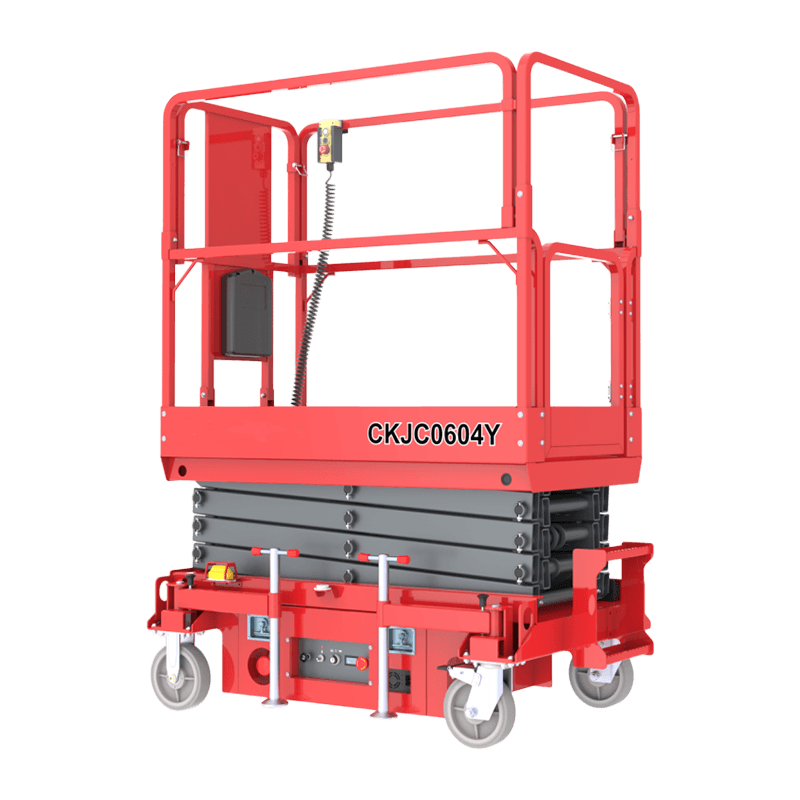 Wholesale CKJC0503Y CKJC0604Y CKJC0705Y CKJC0806Y CKJC1008Y CKJC1210Y CKJC1412Y Zhejiang Wizplus Smart Equipment Ltd is top China wholesale CKJC0503Y CKJC0604Y CKJC0705Y CKJC0806Y CKJC1008Y CKJC1210Y CKJC1412Y CKJC161...View Product →, keep acquisition costs lower when travel distance on site is short.
Every platform family is a set of trade-offs between height, capacity, footprint, and price. Understanding which trade-off fits your operation comes down to four numbers: working height, load rating, platform footprint, and the distance the machine must travel during a typical shift.
Working height is the distance from the ground to the highest point an operator can safely reach from the platform floor. It is not the same as platform height. Check the figure on the specification sheet rather than assuming it. For most warehouse and facility jobs, a machine with a working height between 5 m and 10 m covers lighting, racking, and overhead utility work. Construction and exterior cladding tasks often push the requirement higher.
The rated load tells you how much weight the platform can carry safely, including the operator, tools, and materials. A single-person maintenance job with a heavy tool bag can easily reach 200 kg. If two workers routinely go up together with a spare motor or a welding set, look for a model rated at 400 kg or higher. Undersizing this figure is the fastest way to compromise daily productivity.
A platform that cannot pass through your racking aisle or standard double door is a platform you will fight every day. Check overall width, stowed height, and turning radius. Narrow-body scissor lifts exist precisely for these situations, and single-mast platforms can move through single doors without dismantling anything.
Indoor concrete is forgiving. Outdoor or semi-finished sites with drainage slopes, loose gravel, or soft soil are not. Rubber tires suit smooth floors, but a machine with proper traction and parking brakes should still be specified when surfaces are damp or slightly sloped. If the floor has expansion joints or cracked slabs, ask how the platform's wheelbase and tire size handle uneven transitions.
| Platform Type | Working Height | Typical Load | Best-Fit Setting |
|---|---|---|---|
| Semi-electric scissor lift | 5–16 m | 300–500 kg | Facility maintenance, construction finishing |
| Self-propelled single mast lift | 4–10 m | 150–200 kg | Narrow-aisle overhead work |
| Mobile stock picker | 3–4 m | 150–300 kg | Warehouse order picking |
| High-altitude reclaimer | 3–4.5 m | 150–300 kg | Compact stock retrieval and inventory checks |
If your platform moves mostly within a single work bay, semi-electric drive keeps purchase and maintenance costs lower while covering most indoor maintenance tasks. If your crew travels long distances, works on ramps, or moves between multiple areas throughout a shift, a full-electric self-propelled platform saves more labor and causes fewer workflow interruptions.
On a semi-electric scissor lift, the operator pushes the machine to the work area and uses an electric motor to raise and lower the platform. This simplicity makes the machine lighter, less expensive, and easier to maintain. It also keeps the battery system smaller because the drive motor is not doing heavy work.
A full-electric platform adds a drive motor and steering system, so the operator controls travel from the platform or from a ground control point. This configuration makes sense in large warehouses and on construction sites where walking back and forth to move the machine wastes time. Electric hydraulic steering, in particular, gives good maneuverability in confined spaces. A platform such as the self-propelled single mast lift platform is a typical example of this compact, full-electric approach.
 Wholesale AM-S06 AM-S75 Self-Propelled Single-Mast Lift Platform Manufacturers, Zhejiang Wizplus Smart Equipment Ltd is top China wholesale AM-S06 AM-S75 Self-Propelled Single-Mast Lift Platform Manufacturers, Factory...View Product →
Battery maintenance is another point of comparison. Semi-electric machines use smaller batteries because they only power the lift function. Full-electric machines draw more from the battery pack, so charging infrastructure and shift length should be considered at the planning stage. For multi-shift operations, plan for a spare battery or a charging schedule that does not interrupt the working day.
Compared with the cost of a fall, every safety feature on a lift platform is inexpensive. Four items should be verified before you commit to any purchase.
Scissor-type platforms are designed for level surfaces. A tilt sensor with an audible alarm warns the operator before the machine reaches an unsafe angle. For outdoor work, ask what angle activates the alarm and whether leveling jacks are available as an option.
A platform without proper barriers is not a work platform. Guardrail height, toe boards along the platform edge, and a gate that prevents accidental exits are basic requirements. These details matter most when workers carry bulky materials or step on and off the platform throughout the day.
Ground-level lowering controls allow a second person to bring the platform down in an emergency or when the operator cannot reach the panel. An unmistakable emergency stop button, visible from both the platform and the ground, is a requirement in every situation.
Ask the supplier directly about compliance with ISO and CE requirements. Certified machines come with documented testing of structural welds, hydraulic components, and electrical systems. If the manufacturer cannot show the paperwork, the price discount is not worth the workplace risk. For a deeper walkthrough of the checks that matter before purchase, the electric scissor lift platform selection and safety guide explains the details in practical terms.
Work through the following six steps, and the right machine family tends to reveal itself. If you want to keep the shortlist wide at the start, browse the complete electric work platform range before applying the filters below.
If the operator's main task is pulling cases from lower racking levels or retrieving items that slipped to the back of a shelf, a purpose-built machine is often more productive than a general-purpose scissor: the full-electric high-altitude reclaimer series combines a compact body with the low-level reach that order picking actually requires.
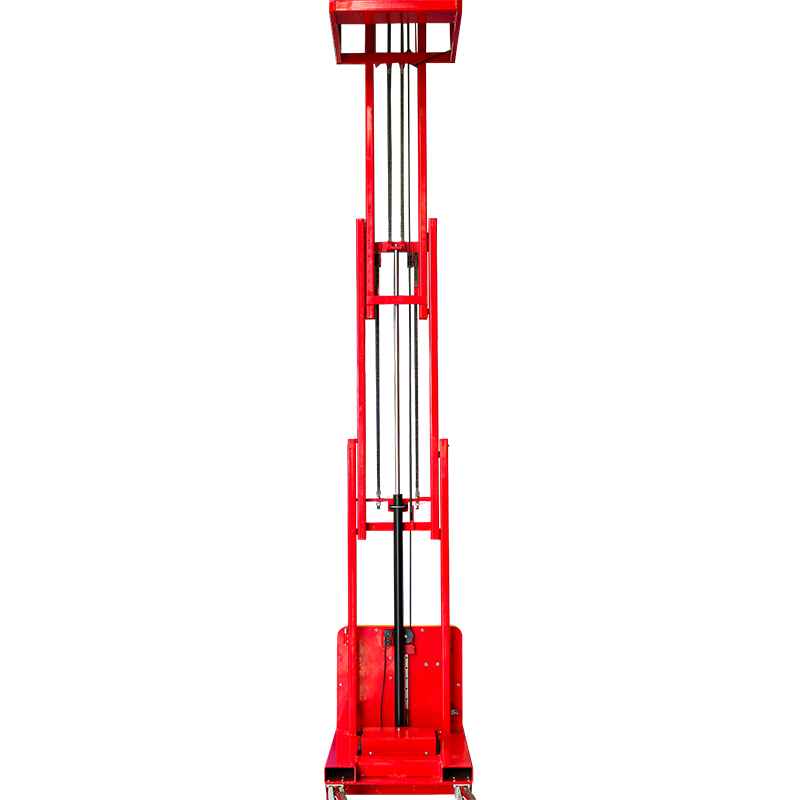 Wholesale CKOP30 CKOP35 CKOP40 CKOP45 Self-Propelled Full Electric High-AltitudeZhejiang Wizplus Smart Equipment Ltd is top China wholesale CKOP30 CKOP35 CKOP40 CKOP45 Self-Propelled Full Electric High-Altitude Reclai...View Product →
Your job site already contains the answer; the platform just needs to match it. Measure the paths, verify the floors, decide between semi-electric and full-electric drive, and shortlist only models that carry the safety features your workplace policy requires. Then compare that shortlist against real specifications rather than marketing claims. And if the project involves unusual loads or dimensions, ask the manufacturer directly — an aerial work platform manufacturer with in-house engineering can tell you quickly whether the requirement is better met by a standard model or a custom electric lifting platform. Getting that answer right at the start is what separates a platform that pays for itself from one that simply sits in the corner.
The mini electric mobile scissor lift with universal wheel integrates lifting, walking and operation functions. It adopt...
The CKJC0705EH CKJC0604EH CKJC0503EH mini electric hydraulic steering mobile scissor lift is designed for efficient oper...
The hydraulic self-propelled scissor lift aerial work platform can be easily driven and moved on flat and solid ground a...
Semi-electric scissor lifts platform are lighter and smaller in size, making it easier for workers to lift or lower the ...

