
 English
 Español
 عربى
عربى

Comprehensive Guide to Lift Platform: Types, Functions, and Safety Maintenance
In modern industrial and construction fields, Lift Platform has become an indispensable piece of equipment. Whether it i...

The modern warehouse is a high-stakes environment where efficiency and safety are not just goals—they are the foundational pillars of profitability and operational integrity. At the heart of this delicate balance is a specialized machine: the warehouse order picker forklift. Unlike traditional forklifts designed for horizontal transport, order pickers are engineered for vertical accessibility, elevating the operator directly to the storage location for precise item selection. This capability is indispensable in the age of e-commerce, where order profiles are increasingly characterized by high SKU counts, single-item picks, and relentless delivery deadlines. However, the relentless pursuit of speed and throughput must be intrinsically linked with an uncompromising commitment to safety. This comprehensive guide explores how contemporary order picker forklifts synthesize advanced engineering, intelligent software, and human-centric design to create an ecosystem where peak productivity and paramount personnel protection are not competing interests, but synergistic outcomes. We will delve into operational optimization, critical features, safety ecosystems, and strategic acquisition considerations, providing a holistic view for logistics managers and operations professionals.
The integration of a warehouse order picker forklift into a material handling system is a strategic decision that reverberates across multiple Key Performance Indicators (KPIs). Its primary function—enabling “man-to-goods” picking—directly attacks some of the most significant inefficiencies in traditional “goods-to-man” or ground-level picking systems. By bringing the operator to the stock-keeping unit (SKU), it drastically reduces travel time, which can account for over 50% of a picker’s shift. Moreover, it dramatically improves picking accuracy by allowing visual verification and handling of the exact item, reducing costly errors and returns. The vertical reach of these machines, particularly a high-reach order picker reach truck, empowers facilities to maximize cubic storage space, building upwards rather than outwards—a critical advantage in high-rent urban logistics centers. This strategic optimization extends to labor management as well; the reduced physical strain can lead to lower turnover, less fatigue-related error, and a broader pool of potential operators. The decision to implement this technology is, therefore, a cornerstone in building a resilient, scalable, and efficient fulfillment operation capable of adapting to market volatility and consumer demand.
Evaluating a warehouse order picker forklift requires looking beyond the basic specifications of lift height and capacity. A truly high-performance machine is defined by the integration of its drive system, control architecture, energy management, and operator interface. The industry standard has shifted decisively towards AC-powered systems, which offer superior control over acceleration and deceleration, leading to smoother operation, reduced product damage, and extended component life. The intelligence of the machine is housed in its programmable logic controller (PLC) and software, which govern everything from travel curves to hydraulic sensitivity. For operations requiring sustained power for multi-shift use or heavy loads, a high capacity order picking forklift will feature a high-efficiency AC drive motor paired with a high-amperage battery and a smart charger with opportunity charging capability. The operator’s interface—typically a multi-function handle and a digital display—should be intuitive, customizable, and provide diagnostic feedback, turning the operator into an informed controller of the system rather than just a driver.
The platform is the operator’s office for the duration of their shift, and its design is paramount to productivity and safety. An ergonomically advanced platform is not merely a standing area; it is a system-integrated workstation. It features a large, anti-fatigue mat, ample room for a picking cart or tote, and strategically placed, dampened controls that require minimal force to operate. The layout is designed to keep the operator’s focus forward and upward on the picking task, not down on confusing levers. Critical forklift order picker safety features are integrated here: a safety harness anchor point rated for fall arrest, interlocked gates that cut power if opened, and an emergency stop button within easy reach. The control system itself often includes dual-speed options (high for travel, low for precise positioning) and may offer programmable “creep” modes for exact alignment with racking. This environment directly contributes to both the speed of operation, by reducing fatigue and cognitive load, and the safety, by making safe operation the easiest path.
The choice between different drive configurations and battery technologies is a direct response to an operation's specific duty cycle and economic model. A facility running a single 8-hour shift with light loads might prioritize initial cost and maneuverability, while a 24/7 distribution center needs maximum uptime, energy efficiency, and durability.
| System Aspect | Standard 3-Wheel (AC) | Heavy-Duty 4-Wheel (AC) | Lithium-Ion Power Option |
| Ideal Duty Cycle | Light to medium, single shift. | Medium to heavy, multi-shift. | Any duty cycle requiring fast charging and minimal maintenance. |
| Operational Cost | Lower initial investment; good energy efficiency. | Higher initial cost offset by longevity and stability for high capacity work. | Highest initial cost, but lowest lifetime cost due to zero maintenance, rapid charging, and long lifespan. |
| Key Advantage | Best-in-class maneuverability for tight order picker forklift dimensions constraints. | Superior traction, stability, and component life under constant heavy use. | Opportunity charging during breaks, no battery changing, consistent power delivery. |
| Consideration for Used Market | Common in listings for used order picking forklifts for sale near me; check wear on single drive wheel. | Inspect frame for stress and drive motor hours; a robust choice if well-maintained. | Rare in used market; if present, requires professional assessment of battery health and management system. |
Safety around a warehouse order picker forklift cannot be an add-on or a simple list of rules; it must be a deeply embedded ecosystem encompassing machine design, procedural protocols, and cultural reinforcement. While advanced forklift order picker safety features like speed limiting and tilt sensors act as a critical technological safety net, they are the last line of defense. The first line is comprehensive, theory-and-practical-based operator certification that is specific to order pickers, not just generic forklift training. The second line is procedural: enforced daily checklists, clear traffic management plans with designated pedestrian zones, and strict rules regarding load integrity and height restrictions. The third, and most vital, line is cultural: fostering an environment where every employee feels empowered to report near-misses, where safety briefings are routine, and where leadership visibly prioritizes safe work practices over rushed shortcuts. This ecosystem ensures that the sophisticated safety engineering of the machine is matched by an equally sophisticated human system.
Navigating the acquisition of a warehouse order picker forklift is a multi-stage process that demands careful analysis. The journey begins with an internal audit, not with browsing equipment listings. This audit must capture quantitative data: precise aisle widths, floor conditions, clear ceiling heights, average and peak order profiles, and required lift heights and capacities. This data generates a non-negotiable specification list, with order picker forklift dimensions being perhaps the most critical—a machine that cannot fit and operate safely in your aisles is worthless. With specifications in hand, the decision between new and used enters the frame. The search for used order picking forklifts for sale near me can yield value but requires a disciplined inspection checklist focusing on hour meter readings, hydraulic integrity, mast condition, and—most importantly—a full function test of all safety systems. Whether new or used, the total cost of ownership (TCO), including energy consumption, expected maintenance, and potential downtime, must be modeled against the initial purchase price.
This blueprint is your objective purchasing guide. It moves beyond "we need a picker" to "we need a picker with these exact capabilities to solve these specific problems." It starts with the most constrained parameter, usually aisle width, and works outward. For a high capacity order picking forklift, the capacity must be verified across the entire height range using the manufacturer's load chart, not just at the standard 24-inch load center. Consider future needs as well; opting for slightly more capacity or height than currently needed can provide flexibility for business growth. This blueprint also serves as the perfect benchmark for evaluating demonstrations or inspecting used equipment, ensuring emotion does not override operational necessity.
The warehouse order picker forklift is not a static technology; it is rapidly evolving within the broader context of warehouse automation and Industry 4.0. The most immediate trend is the integration of telematics and Internet of Things (IoT) sensors. These systems provide real-time data on machine location, utilization, energy levels, and even predictive maintenance alerts, feeding into a central dashboard for fleet optimization. Furthermore, we are seeing the rise of operator-assist technology, such as guided positioning systems that help the operator align the platform perfectly with the pick face, or collision avoidance systems that use sensors to detect obstacles and automatically slow or stop the machine. Looking further ahead, the line between manual and automated equipment is blurring. Some systems now offer "person-on-board" automation, where the operator is driven automatically between pick locations along optimized routes, only taking manual control for the final precise positioning and pick. This evolution points towards a future where the order picker forklift becomes an intelligent, connected node in a fully optimized digital warehouse ecosystem.
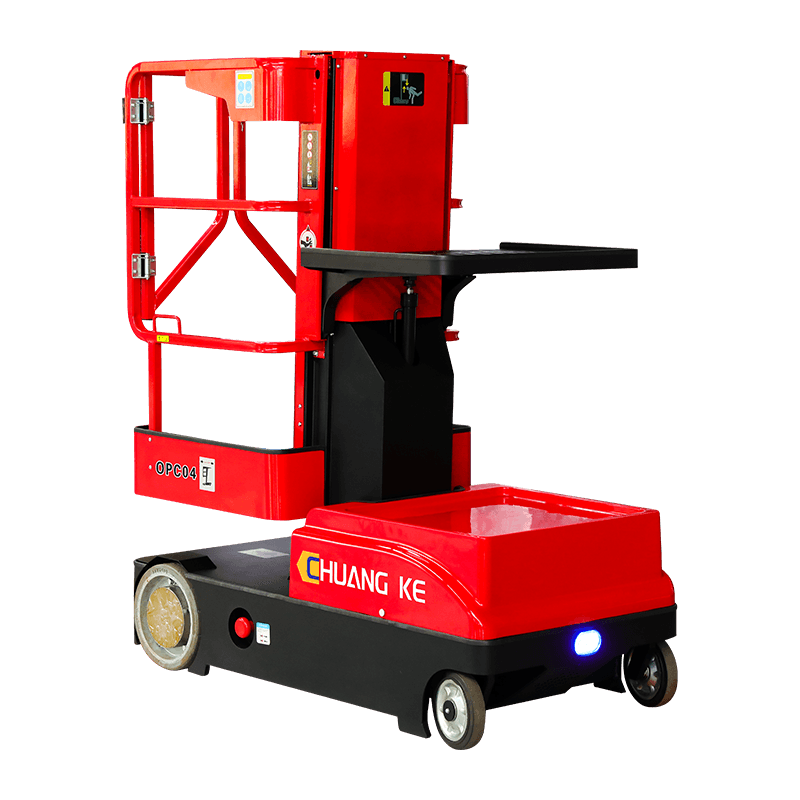
The cost of a new warehouse order picker forklift can range significantly, from approximately $25,000 for a basic, low-capacity model to over $80,000+ for a high-capacity, high-lift model with advanced safety and telematics packages. The price is driven by several factors: Lift Height & Capacity: A high capacity order picking forklift designed for 40-foot heights costs more than a low-level picker. Technology: AC drive systems, advanced controls, and integrated safety features add cost but improve performance and TCO. Power Source: Lithium-ion batteries add a substantial upfront premium over lead-acid. Customization: Special order picker forklift dimensions or unique platform configurations increase price. For used order picking forklifts for sale near me, prices can be 30-60% lower, heavily dependent on age, hours, condition, and remaining component life. The key is to evaluate total cost of ownership, not just the sticker price.
Regular preventive maintenance is the single most important factor in ensuring the longevity and safe operation of a warehouse order picker forklift. For electric models, a typical schedule includes: Daily/Pre-shift: Operator-performed visual checks (tires, horns, lights, leaks, platform gate). Every 250 Hours: Professional inspection of brakes, steering, hydraulic systems, and electrical connections. Every 500-1000 Hours: More in-depth service, including hydraulic fluid and filter changes, drive motor brush inspection (on older DC models), and thorough testing of all forklift order picker safety features. Lead-acid batteries require weekly watering (if not sealed) and equalizing charges. Lithium-ion systems require virtually no daily maintenance. A well-documented service history is a critical asset when evaluating any equipment, especially in the used market.
Yes, order picker forklifts are highly adaptable. In mezzanine applications, they are used to access the upper levels directly from the main floor, often via specially designed gates or openings in the mezzanine deck. Critical considerations here include the order picker forklift dimensions (to fit on the mezzanine itself and through access points), the mezzanine's load rating for both the dynamic weight of the moving machine and its static weight when parked, and the presence of secure guardrails. In multi-level facilities with ramps, the machine's gradeability rating (usually a percentage) must exceed the slope of the ramp, and its braking system must be designed for controlled descent. In all non-standard applications, a formal site risk assessment conducted with the equipment supplier and a structural engineer is essential.
Even with training, common operational mistakes persist, often stemming from pressure to work quickly. Key errors include: Overloading the Platform: Placing too many totes or too heavy an item on the platform, exceeding its rated capacity. Not Wearing the Harness: Skipping fall protection due to perceived inconvenience, especially for "quick" low-level picks. Traveling with the Platform Elevated: Moving at full speed with the mast raised, rather than lowering to a safe travel height. Ignoring Environmental Hazards: Not watching for uneven floors, overhead obstacles, or pedestrians when maneuvering. Bypassing Safety Interlocks: Defeating gate switches or warning alarms. Consistent reinforcement of training and a strong safety culture are required to combat these behaviors and fully leverage the machine's built-in forklift order picker safety features.
Effective training for a warehouse order picker forklift is a blended process. It should begin with formal, off-the-floor classroom instruction covering the machine's principles of operation, stability triangle (even for order pickers), and all specific controls and forklift order picker safety features. This is followed by hands-on, practical training in a designated, hazard-free area. Training must be specific to the exact model acquired; a generic forklift license is insufficient. Key practical components include: practicing load handling and placement, executing emergency lowering procedures, navigating a mock obstacle course simulating your aisles, and performing the full pre-operation inspection. For a used order picking forklift, emphasize any unique characteristics or older control systems it may have. Finally, implement a mentorship period where new operators work alongside experienced ones, and require a formal evaluation and certification before granting full operational authority. Refresher training should be mandated annually or following any incident.
In modern industrial and construction fields, Lift Platform has become an indispensable piece of equipment. Whether it i...
In today’s fast-paced logistics and e-commerce landscape, warehouse efficiency is crucial for business success. Warehous...
Transforming Warehouse Efficiency and Safety from Above In today's fast-paced logistics and warehousing industry, maximi...
The modern warehouse is a high-stakes environment where efficiency and safety are not just goals—they are the foundation...
This afternoon, an Algerian client delegation visited Zhejiang Wizplus Smart Equipment Ltd. to conduct in-depth discussi...

© 2021 Reserved. Zhejiang Wizplus Smart Equipment Ltd.
Custom Electric Mobile Lift Manufacturers, Suppliers
