
 English
 Español
 عربى
عربى

CKOP30 CKOP35 CKOP40 CKOP45 Self-Propelled Full Electric High-Altitude Reclaimer
The lifting, movement and steering of the CKOP30 CKOP35 CKOP40 CKOP45 self-propelled full electric high altitude reclaim...

Content
Walk into almost any facility manager's office and you will find the same problem: something at height needs fixing, and the budget is not large enough for rented scaffolding or a crane. A high-altitude lift platform is the practical answer — a mobile machine that raises one or two workers, their tools, and a limited amount of material to a position that a person on the floor cannot safely reach. It replaces ladders and makeshift staging with a guarded platform, controlled lifting, and the ability to move the machine to the next work point without dismantling anything.
The most useful way to approach this category is not as a single product but as a family with a shared job. Scissor lifts, single-mast lifts, warehouse reclaimers, and order pickers all qualify as high-altitude lift platforms, yet they differ sharply in working height, footprint, load capacity, and drive system. The correct first step in any purchase is therefore to define the work parameters — height, space, load, floor condition — before looking at machine types.
Five configurations cover the large majority of real-world orders. Each one solves a different combination of height, space, and duty cycle.
A scissor lift raises one large, flat platform on a linked steel structure. Its strength is working space: two people plus a tool cart can stand side by side, which makes it the default for construction, installation, and facility maintenance. Semi-electric models are pushed manually and use electric power for lifting, which lowers cost and weight; full-electric models drive themselves, a significant time-saver in large plants and on outdoor surfaces.
For a practical balance of price and capability, the semi-electric scissor lift range covers platform heights of roughly 5 to 16 meters across eight models, with platform sizes that accommodate two workers and their equipment.
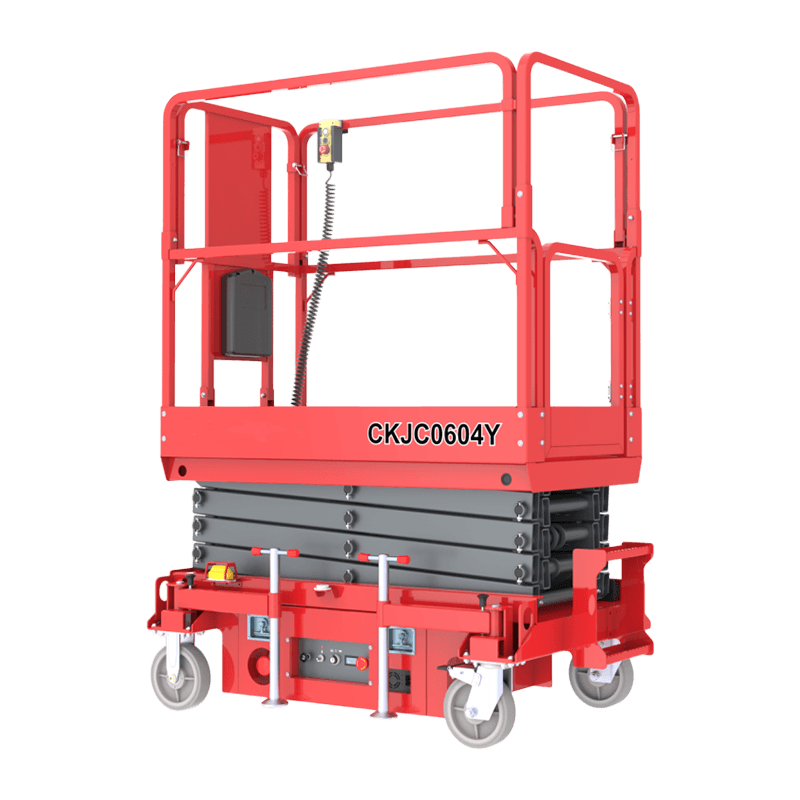 Wholesale CKJC0503Y CKJC0604Y CKJC0705Y CKJC0806Y CKJC1008Y CKJC1210Y CKJC1412Y Zhejiang Wizplus Smart Equipment Ltd is top China wholesale CKJC0503Y CKJC0604Y CKJC0705Y CKJC0806Y CKJC1008Y CKJC1210Y CKJC1412Y CKJC161...View Product →
When the machine has to pass through a standard door or work in an aisle barely wider than a person, a single-mast lift is usually the correct shape. The operator platform climbs a vertical mast, while the compact base leaves room for other traffic. Aluminum construction keeps weight down, which protects sensitive floors and makes the unit easier to position. The self-propelled single-mast lift platform in the aluminum alloy product family combines a small turning radius with electric drive, which suits production lines, mezzanine edges, and narrow corridors.
 Wholesale AM-S06 AM-S75 Self-Propelled Single-Mast Lift Platform Manufacturers, Zhejiang Wizplus Smart Equipment Ltd is top China wholesale AM-S06 AM-S75 Self-Propelled Single-Mast Lift Platform Manufacturers, Factory...View Product →
Inside a rack system, the highest picking level is usually only 3 to 4.5 meters off the floor, but reaching it repeatedly over a full shift demands more than a ladder. A high-altitude reclaimer lifts the operator on a small platform that rises with the picking hand, so the worker faces the rack at eye level instead of reaching above shoulder height. Operators moving through narrow rack aisles should review the warehouse high-altitude reclaimer safety protocols before the first shift.
Order pickers are the narrowest of the group, with working heights of 3 to 4 meters, designed for very narrow aisle applications. Custom lifting platforms cover everything else: unusual platform dimensions, heavier payloads, or fixed installations where a standard mobile base does not fit. A manufacturer that runs its own fabrication line can build these without turning the project into a long engineering exercise.
| Configuration | Platform space | Typical working height | Drive | Best fit |
|---|---|---|---|---|
| Scissor lift | Large, shared | 5–16 m | Semi-electric or electric | Construction, installation, maintenance |
| Single-mast lift | Compact | 4–10 m | Electric self-propelled | Tight aisles, doorways, light floors |
| Warehouse reclaimer | Small, waist-level | 2.7–4.5 m | Full electric or semi-electric | Rack picking and restocking |
| Order picker | Very compact | 3–4 m | Electric | Very narrow aisles |
| Custom lift platform | Per specification | Per specification | Per specification | Non-standard loads and layouts |
Once the configuration is clear, five variables determine the final specification. Write them down before requesting quotes, because every supplier will ask for the same information.
Calculate the distance from the floor to the highest task point, then add the operator's height and natural arm reach — usually 1.8 to 2 meters. A user who must reach 7 meters should specify a machine with at least 8.8 to 9 meters of working height. Platform size is the second number: if two mechanics are expected to work together, a single-person mast will not do, regardless of lift height.
Rated platform capacity is a planning number, not a suggestion. The machine lifts the operator plus all tools and materials, and a 230 kg capacity disappears quickly once a second person, a drill, and a parts box are on board. Check the rating at full height, because some machines derate as they extend. Also check the maximum slope the machine tolerates before the tilt alarm activates; on uneven ground, outriggers or stabilizers are the difference between a steady platform and an unsafe one.
Power and drive are often bundled in confusing ways. A semi-electric scissor lift is pushed by hand between positions but lifts electrically; a full-electric machine drives itself, which is noticeably faster on large sites and less tiring over a full shift. In very narrow aisles, hydraulic steering or universal-wheel versions rotate the machine in place, removing the need for a three-point turn.
Measure the site before shortlisting any machine. Doorway width decides whether a narrow-body or single-mast configuration is mandatory. Floor load limits favor light aluminum frames over heavier steel towers. Ramp gradients and outdoor paths push the choice toward solid tires and self-propelled drive, since indoor machines with smooth tires can lose traction on wet concrete or gravel. A systematic walk-through of these checks is laid out in the electric scissor lift platform selection guide, which covers the same variables for job sites where scissor lifts are the leading candidate.
Every candidate machine should meet the same baseline: CE compliance for European markets, ISO-aligned quality management in the factory, and a documented test record for each production unit. Guardrails, emergency descent, anti-slip platform surfaces, and tilt alarms are part of the safety case, not optional extras. Ask the manufacturer where the machine is tested and what the test covers; a broader summary of what to inspect appears in the high lift platform types, safety, and selection guide.
In practice, a well-specified high-altitude lift platform pays for itself quickly in four kinds of work:
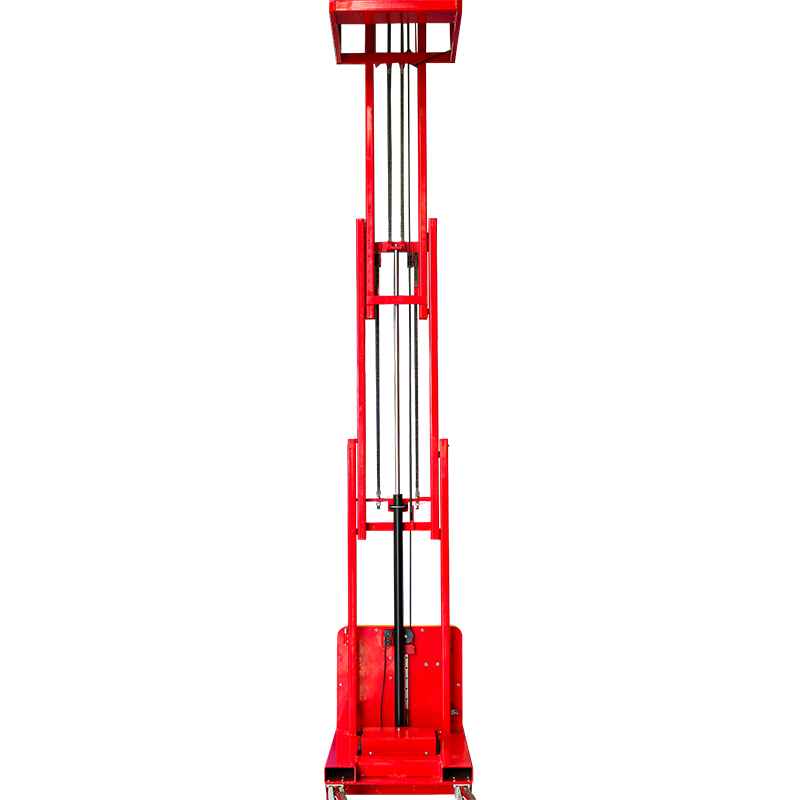 Wholesale CKOP30 CKOP35 CKOP40 CKOP45 Self-Propelled Full Electric High-AltitudeZhejiang Wizplus Smart Equipment Ltd is top China wholesale CKOP30 CKOP35 CKOP40 CKOP45 Self-Propelled Full Electric High-Altitude Reclai...View Product → offers a self-propelled platform with working heights from 3.0 to 4.5 meters, while semi-electric versions from 2.7 to 4.5 meters cover facilities that want a simpler, lower-cost option.
Agriculture appears on most manufacturers' application lists as well, mainly for maintenance in high barns and storage buildings. The machine logic matches the industrial cases: vertical reach, compact movement, and a guarded platform for the operator.
With the spec locked, focus on the manufacturer rather than the sticker price. A factory that cuts, bends, welds, and paints in-house controls tolerances far better than a firm that only assembles bought-in components. Ask about steel thickness, welding process, and load test results, and confirm that the supplier operates an actual test facility.
Zhejiang Wizplus Smart Equipment builds its high-altitude lift platforms in a 20,000-square-meter workshop in Deqing, China, with laser cutting, CNC bending, robotic welding, and a full painting line in-house, and tests production against ISO and CE requirements. That vertical integration is why the semi-electric scissor series, the aluminum mast platforms, and the custom lifting platform business can coexist under one roof. For most buyers, the practical conclusion is simple: define the five numbers — working height, platform size, capacity, available floor space, and slope — then compare machines that match them, and buy from a manufacturer that can show its own test records.
The lifting, movement and steering of the CKOP30 CKOP35 CKOP40 CKOP45 self-propelled full electric high altitude reclaim...
This self-propelled single mast aluminum alloy lift platform is built with high-strength aluminum alloy, offering a ligh...
The CKOPY27 CKOPY33 CKOPY40 CKOPY45 half-electric high-altitude reclaimer is only powered by batteries for lifting, and ...
The mini electric mobile scissor lift with universal wheel integrates lifting, walking and operation functions. It adopt...

