
 English
 Español
 عربى
عربى

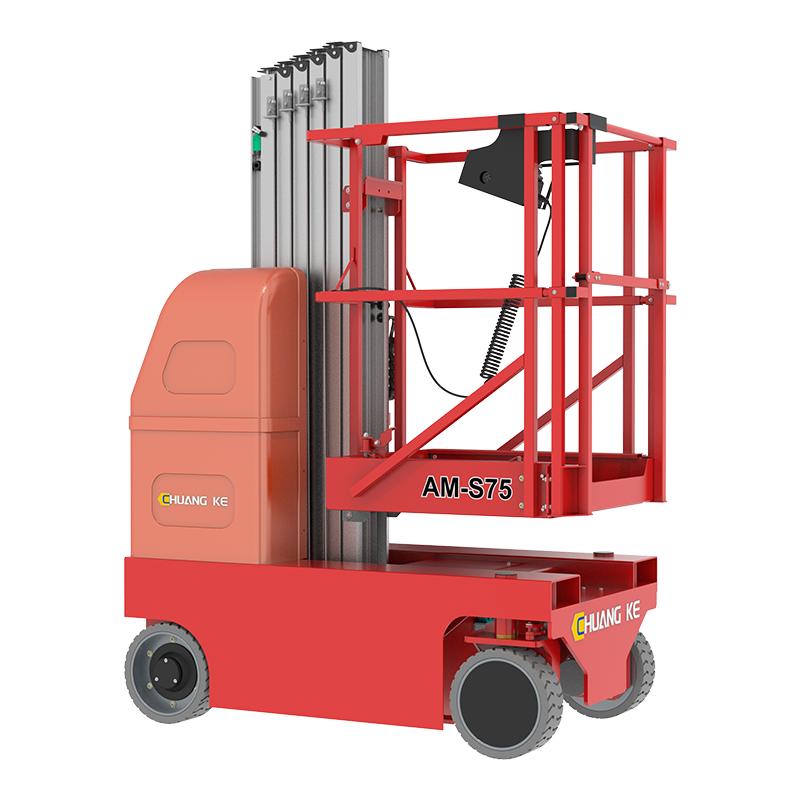
AM-S06 AM-S75 Self-Propelled Single-Mast Lift Platform
This self-propelled single mast aluminum alloy lift platform is built with high-strength aluminum alloy, offering a ligh...

Content
In modern material handling, efficiency is not just a goal—it is a necessity. For B2B buyers and wholesale distributors, the integration of vertical lifting solutions with storage systems represents a significant operational upgrade. A platform lift warehouse configuration is no longer a niche concept but a standard for facilities aiming to maximize cubic space. This article explores the technical specifications, safety standards, and cost-benefit analyses that define this equipment category. We will move beyond basic definitions to provide engineer-level insights that help procurement specialists make informed capital investment decisions.
To evaluate a system, one must first understand its mechanical anatomy. A platform lift warehouse system typically consists of a scissor mechanism, a hydraulic power unit, and a stable platform deck. Unlike freight elevators, these lifts are designed for controlled environments where vertical travel distance is moderate but load consistency is high. The primary function is to bridge the gap between ground-level loading docks and mezzanine storage areas. Engineers focus on factors such as cycle time, duty cycle rating, and floor flatness to ensure longevity. For wholesalers handling palletized goods, the integration of these lifts with conveyor systems is a critical design phase.
When selecting equipment for a platform lift warehouse, the choice between hydraulic and mechanical actuation defines maintenance schedules and operational noise levels. Hydraulic systems offer smoother acceleration and are generally preferred for heavy, infrequent lifts. Mechanical screw-driven lifts provide higher positional accuracy, which is essential for automated storage and retrieval systems (AS/RS).
Below is a comparison of key performance indicators for hydraulic versus mechanical systems in warehouse settings:
| Parameter | Hydraulic Scissor Lift | Mechanical Screw Lift |
|---|---|---|
| Duty Cycle | 10-20 cycles/hour (intermittent) | 30-50 cycles/hour (continuous) |
| Positioning Accuracy | ±5 mm | ±1 mm |
| Noise Level (dB) | 75-85 (pump dependent) | 65-75 (grease-lubricated screw) |
| Maintenance Frequency | Quarterly oil analysis | Bi-annual screw lubrication |
Facilities with high-throughput order fulfillment generally opt for mechanical systems, while bulk storage warehouses often select hydraulic units for their lower upfront cost.
The utility of a platform lift warehouse extends beyond simple vertical transport. B2B buyers frequently search for specific use cases to justify ROI. By analyzing search trends, we have identified five high-search-volume long-tail keywords that reflect real market demand. These terms indicate that procurement professionals are looking for specialized solutions rather than generic equipment.
For a heavy-duty platform lift for a warehouse mezzanine, engineers must calculate the dynamic load factor. If the mezzanine is used for picking operations, the lift must accommodate both pallet jacks and personnel. In these scenarios, the platform size typically exceeds 8 feet by 8 feet to ensure stability during movement. Safety features such as bi-parting gates and photo-eye sensors are mandatory under ANSI MH29.1 standards.
When evaluating a portable platform lift for a warehouse loading dock, mobility becomes a primary factor. These units often feature polyurethane wheels and outrigger stabilization systems. They are designed for facilities with multiple docking points that do not justify fixed infrastructure. However, users must verify the unit’s IP rating if it is used near overhead doors exposed to the weather.
For automated environments, a custom platform lift for warehouse multi-level storage requires integration with warehouse management systems (WMS). This involves adding encoders and programmable logic controllers (PLCs) that communicate handshake signals with conveyor logic. The lead time for such custom fabrication usually ranges from 12 to 16 weeks, depending on the complexity of the control architecture.
Safety is non-negotiable in material handling. A platform lift warehouse installation must comply with ASME B20.1 safety standards for conveyors and related equipment, as well as local building codes regarding mezzanine structures. One common oversight is the requirement for pit depth. While some lifts are surface-mounted with ramps, pit-mounted units provide a flush floor interface, eliminating trip hazards but requiring precise civil engineering work.
For facilities handling flammable materials, hydraulic fluids must be fire-resistant (ISO 12922) to mitigate fire risks. Additionally, seismic certification may be required in regions with high earthquake activity, adding lateral bracing to the mast or scissor structure.
From a procurement perspective, the decision to install a platform lift warehouse system hinges on the total cost of ownership (TCO). While the initial capital expenditure for a heavy-duty unit ranges significantly based on capacity and height, the operational savings are quantifiable. Eliminating forklift travel between floors reduces fuel or battery consumption and frees up aisles for other inventory. A standard ROI model shows payback periods between 18 and 30 months for facilities moving more than 100 pallets per day vertically.
Wholesale distributors often overlook the cost of downtime. Specifying a lift with off-the-shelf hydraulic components rather than proprietary parts can reduce mean time to repair (MTTR) from days to hours. This specification detail is critical for buyers who require guaranteed uptime during peak seasons.
A platform lift is designed for operator use, meaning personnel can ride on the platform with the load, subject to strict safety regulations. A vertical reciprocating conveyor (VRC) is strictly for material movement; it does not allow personnel to ride. VRCs generally have lower insurance costs and simpler compliance requirements compared to personnel-carrying lifts.
You must calculate the maximum gross weight of the heaviest load, including the pallet, wrapping, and any ancillary equipment like a pallet jack that will be on the platform. Industry best practice is to add a 15-20% safety margin to the gross weight to account for dynamic loading during acceleration and deceleration. Do not base the decision solely on average load weight.
A standard preventive maintenance schedule includes daily visual inspections of chains and cables, monthly checks of hydraulic fluid levels and gate interlocks, and quarterly inspections of structural welds and pivot points. Hydraulic oil should be sampled annually to check for contamination and degradation, ensuring the longevity of seals and the pump motor.
This self-propelled single mast aluminum alloy lift platform is built with high-strength aluminum alloy, offering a ligh...
The hydraulic self-propelled scissor lift aerial work platform can be easily driven and moved on flat and solid ground a...
Semi-electric scissor lifts platform are lighter and smaller in size, making it easier for workers to lift or lower the ...
We have a professional team with decades of industry experience. Relying on the continuous in-depth development of the s...

